
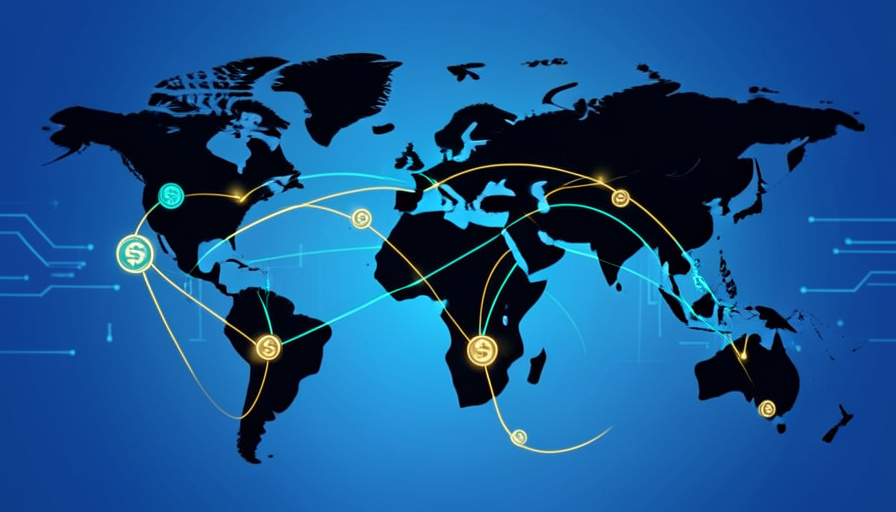
BRICS Pay: Is the Dollar-Free Payment System Real?
Behind the BRICS summit’s talk of “trade settlement and currency coordination” sits a concrete idea: BRICS Pay, a way to move money between members without SWIFT or the dollar. Here is what is actually built, and what is still a slide deck.
When leaders say they are working on “cross-border payment interoperability,” most people tune out. It sounds like a committee. But underneath that phrase is one of the more consequential experiments in global finance: an attempt by a large bloc of countries to trade with each other without routing payments through American infrastructure. The New Delhi summit pushed it forward. Whether it works is a different question.
The Short Version
BRICS Pay is a planned system to let member countries settle cross-border payments in their own currencies, connecting national networks like India’s UPI, Brazil’s Pix, China’s CIPS, and Russia’s SPFS, and bypassing SWIFT. Real building blocks exist, including the mBridge project that already moves billions between a handful of central banks. But a fully operational, dollar-free BRICS payment system is still more roadmap than finished rail, and it reduces reliance on the dollar for member trade rather than replacing the dollar globally.
What BRICS Pay is supposed to be
BRICS Pay is the headline project: a shared system that lets a business in one member country pay a business in another in local currency, without converting to dollars and without sending the message through SWIFT, the Belgium-based network that carries most international bank transfers today. The design leans on infrastructure that already exists. Rather than building one giant new network, BRICS Pay aims to stitch together national instant-payment and messaging systems, India’s UPI, Brazil’s Pix, China’s CIPS, Russia’s SPFS, and connect central-bank digital currencies on top. Coverage of BRICS laying the first tracks for a new payment system describes exactly this stitching-together approach.
The pieces that already work
The ambition is not starting from zero, which is why it deserves to be taken seriously. Two things are genuinely real. First, the national systems are enormous: India’s UPI and Brazil’s Pix already process billions of domestic transactions, so the domestic plumbing is proven. Second, a multi-country experiment called mBridge, which links several central banks’ digital currencies, has moved real money and can settle a transaction in seconds rather than days. After the Bank for International Settlements stepped back from mBridge in late 2024, the participating countries kept developing it on their own. That is a working proof of concept for cross-border settlement that does not touch SWIFT.
What it can and cannot do
Here is the measured version, away from both hype and dismissal. What this infrastructure can do is real: it lets members settle more of their trade in local currencies, cuts fees and delays, and gives them an option if they are ever cut off from SWIFT, which is a live fear after recent sanctions. By some accounts, a large and growing share of intra-BRICS trade already settles in local currencies rather than dollars, part of a broader shift in monetary-reform momentum that researchers have tracked for years.
What it cannot do, at least not soon, is replace the dollar as the world’s money. The dollar’s dominance rests on deep, liquid markets, trust, and the fact that most of the world wants to hold and trade in it, none of which a payment network changes by itself. A currency you can send quickly is not the same as a currency others want to hold. BRICS Pay is best understood as a parallel road for members who want one, not a demolition of the existing highway.
Why “replacing the dollar” is the wrong headline
The loudest coverage frames every BRICS payment step as the dollar’s downfall, and it keeps being wrong for the same reason: it confuses plumbing with power. As the New Delhi summit made clear, the bloc is not launching a single BRICS currency, and even the payment system is being assembled piece by piece across countries with very different economies and interests. Progress is real and probably durable. It is also incremental, technical, and slow, which does not make for viral headlines but is the honest shape of the thing.
This article is general information about global economics, not financial or investment advice. Currency and geopolitical trends are uncertain, so consult a qualified professional before making financial decisions based on them.
Key Takeaways
- BRICS Pay is a planned system to settle member trade in local currencies, bypassing SWIFT and the dollar.
- It connects existing national rails like UPI, Pix, CIPS, and SPFS rather than building one new network.
- The mBridge central-bank digital-currency project is a working proof of concept for fast, SWIFT-free settlement.
- The system reduces dollar reliance for member trade but does not replace the dollar globally.
- There is still no single BRICS currency; this is payment infrastructure, not a new money.
For more global-economy coverage, browse the DelightfulBlogs Business section, or follow our News desk.
Frequently Asked Questions
What is BRICS Pay?
BRICS Pay is a planned cross-border payment system that would let BRICS members settle transactions in their own currencies, connecting national payment networks and bypassing SWIFT and the US dollar.
Does BRICS Pay replace SWIFT?
Not yet, and not entirely. It is designed as an alternative for members who want to avoid SWIFT, but it is still being built and integrated. SWIFT still carries the large majority of international transfers.
Is there a single BRICS currency?
No. BRICS is working on payment systems and local-currency trade, not a shared currency. A common currency would require shared monetary policy across very different economies.
What is mBridge?
mBridge is a project linking several central banks’ digital currencies to settle cross-border payments in seconds without SWIFT. It has moved real money and continued developing after the Bank for International Settlements stepped back in 2024.
Will this end the dollar’s dominance?
Not soon. These systems reduce dollar reliance for specific trade, but the dollar’s global role rests on deep markets and broad trust that a payment network alone does not replace.
Final Word
The most useful way to read BRICS Pay is to separate two questions that headlines love to merge. Can BRICS members increasingly trade without touching the dollar or SWIFT? Yes, gradually, and the New Delhi summit moved that along. Is the dollar about to be dethroned? No, and nothing announced changes that. What is actually happening is quieter and more durable than a currency war: a bloc slowly building its own set of pipes, so that dependence on someone else’s becomes a choice rather than a necessity.