
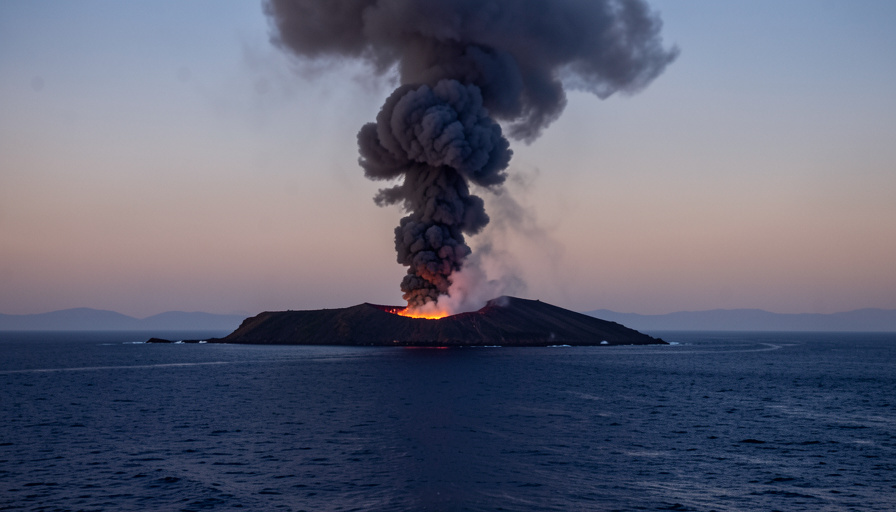
Those Viral Anak Krakatau Images: Are They Real?
Dramatic “boiling sea” and eruption clips of Anak Krakatau are spreading again. Some are real and current, some are years old. Here is how to tell the difference, and where to find the status that actually matters.
Every time Anak Krakatau stirs, two things surge at once: the volcano and your feed. The eruption is real, and it is serious. But alongside the genuine footage comes a familiar wave of recycled clips, mislabeled photos, and captions built for shares rather than accuracy. Sorting the real from the recycled is a skill worth having, because in a volcano scare, a wrong image can travel faster than an official warning.
The Short Version
Anak Krakatau is genuinely active, sitting at Alert Level III, the second-highest on Indonesia’s four-level scale, since early July 2026, with a major eruption in early September that pushed ash to around 15 kilometers and disrupted roughly 3,000 flights. That real activity is exactly why old and fake images spread so easily now. To check any clip, compare it against the official MAGMA Indonesia and PVMBG updates, run a reverse image search, and watch for dramatic 2018 tsunami footage being passed off as today.
What is actually happening right now
Start with the real baseline, because it makes the fakes easier to spot. Anak Krakatau has been at Alert Level III (Siaga) since July 2, 2026, and authorities enforce a 3-kilometer exclusion zone around the crater. A powerful eruption episode ran from late on September 4 into September 6, ejecting ash roughly 15 kilometers into the sky and disrupting nearly 3,000 flights as several airports on Java and Sumatra briefly closed. So yes, the volcano is doing dramatic things. That is the backdrop the misleading posts exploit.
Why old footage keeps coming back
Anak Krakatau has a genuinely frightening history, and that history is the fuel for recycled content. In December 2018, part of the volcano collapsed into the sea and triggered a tsunami that killed hundreds along the Sunda Strait. The footage from that disaster, walls of water hitting the coast, a stage swept away mid-concert, is dramatic and widely available, and it resurfaces almost every time the volcano erupts again, relabeled as if it happened today. A clip can be completely real and still be a lie about when it happened.
How to check an image or video in two minutes
You do not need forensic tools. A few quick habits catch most of it:
- Check the official source first. The MAGMA Indonesia app and website, run by the volcanology agency PVMBG, publish the current alert level and eruption reports. If a viral claim does not match what MAGMA shows, be skeptical.
- Reverse image search a still. Screenshot the clip, run it through Google Lens or a reverse image tool, and see whether it appears in articles from 2018 or earlier.
- Read the caption against the facts. “Boiling sea” and discolored water can be real volcanic effects, but captions claiming a specific death toll or a new tsunami should match wire reports from Reuters, AP, or the BBC before you trust them.
- Look for the date and location behind the drama. Real reporting names the date, the observation time, and the source. A post with none of that and a huge emotional caption is a red flag.
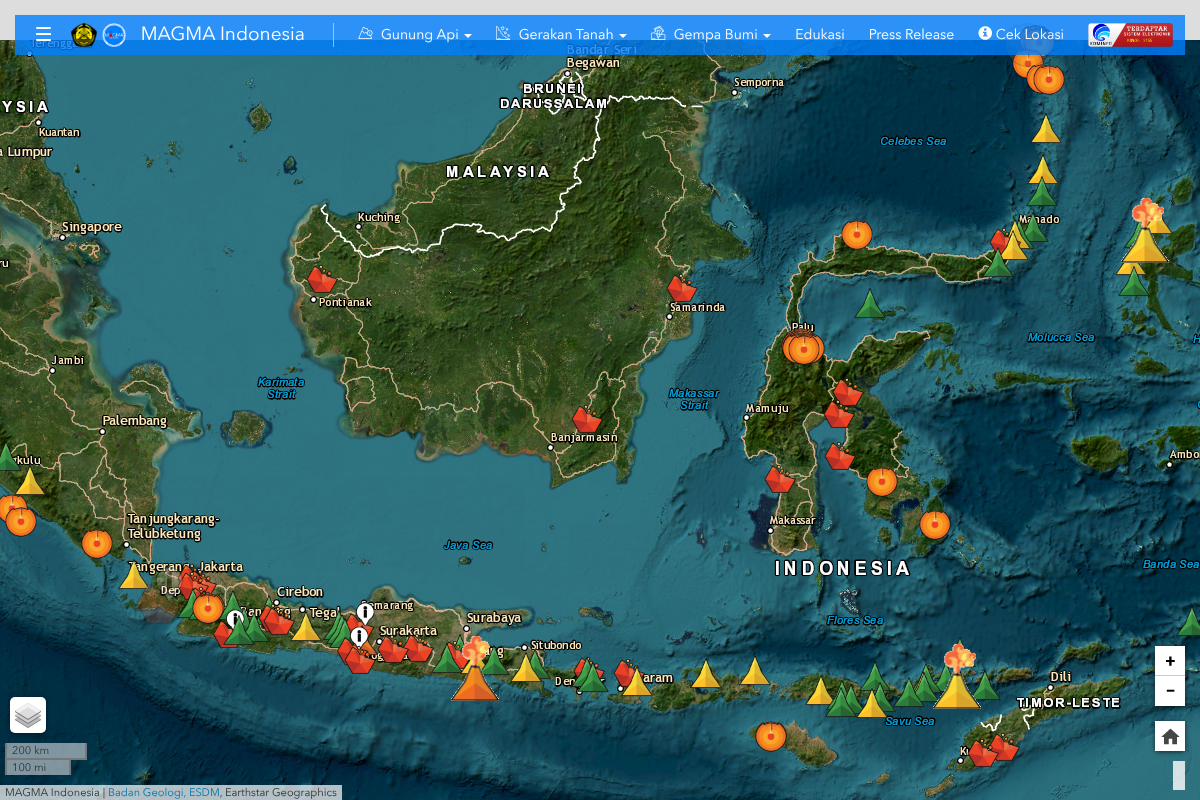
The screenshot above is the MAGMA Indonesia map, where each volcano carries a live alert marker. Bookmark the official MAGMA Indonesia page and you have a reference that beats any viral thread.
What to trust for safety, and what to ignore
If you or someone you know is near the Sunda Strait, get guidance from PVMBG, Indonesia’s disaster agency BNPB, the meteorology agency BMKG for aviation and weather, and official embassy alerts, not from a stranger’s caption. Those bodies set the exclusion zones and the evacuation advice. Viral images can tell you a volcano is in the news; only the official monitors can tell you what to actually do about it.
Key Takeaways
- Anak Krakatau is really at Alert Level III with a major early-September eruption, which is why fakes spread so easily.
- December 2018 tsunami footage is frequently relabeled as current; a real clip can still carry a false date.
- Check MAGMA Indonesia and PVMBG for the actual alert level and eruption reports.
- Reverse image search stills and match dramatic captions against Reuters, AP, or BBC before sharing.
- For safety decisions, follow PVMBG, BNPB, BMKG, and embassy alerts, not viral posts.
For more coverage, follow the DelightfulBlogs News desk, or see our Travel section for the wider region.
Frequently Asked Questions
Is Anak Krakatau erupting right now?
It has been highly active in 2026, sitting at Alert Level III since July and producing a major eruption in early September. Check MAGMA Indonesia for the latest real-time status, since activity changes day to day.
Are the “boiling sea” images of Anak Krakatau real?
Discolored or steaming water near an erupting sea volcano can be a real effect, but many viral clips are recycled or mislabeled. Verify against official reports and a reverse image search before believing a specific caption.
How can I tell if volcano footage is old?
Screenshot it and run a reverse image search to find its earliest appearance. Anak Krakatau’s dramatic December 2018 tsunami footage is the clip most often reposted as if it were current.
Where can I get official Anak Krakatau updates?
The MAGMA Indonesia app and website, run by PVMBG, publish the alert level and eruption reports. Indonesia’s BNPB and BMKG, plus embassy alerts, cover safety and travel guidance.
What is Alert Level III?
Level III, called Siaga, is the second-highest on Indonesia’s four-level volcano scale. It signals elevated activity and, for Anak Krakatau, comes with a 3-kilometer exclusion zone around the crater.
Practical Takeaway
Anak Krakatau does not need exaggeration to be alarming; the real Level III eruption is dramatic enough. That is exactly why a two-minute check is worth the effort before you share. Open MAGMA Indonesia, reverse-search the image, and read the caption with a cold eye. The volcano is real, the danger to people near the strait is real, and the fastest way to help is to pass along accurate information instead of the most frightening clip in your feed.