
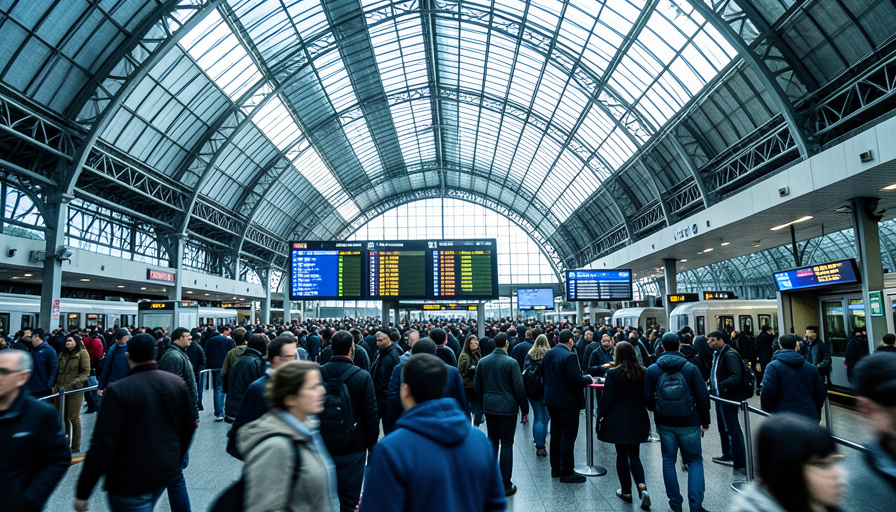
Why London Shuts Its Busiest Stations at Rush Hour
Videos of packed London stations look like something has gone badly wrong. Usually they show the opposite: a deliberate crowd-control system holding people back on purpose. Here is how it actually works.
A clip of a station concourse jammed shoulder-to-shoulder, or a queue snaking out onto the pavement, tends to travel fast with a caption about London falling apart. The reality is less dramatic and more interesting. What you are usually watching is a crowd-management plan doing its job, and the fact that it looks alarming is partly the point. Stopping a dangerous crush means creating a visible, orderly one somewhere safer.
In Brief
When a London station gets too full, staff do not simply let everyone flood in. They close the station to new entries, hold passengers in controlled queues outside, run one-way systems, and sometimes have trains skip the station entirely until the platforms clear. Between February and May 2026, 51 different Tube, DLR, Overground, and Elizabeth line stations carried crowd-management measures like these. Liverpool Street, Britain’s busiest station, is the flagship case, and it is getting a £1.2 billion rebuild aimed squarely at the problem.
What you are actually seeing in the videos
The scenes that go viral are usually crowd control in progress, not a system that has collapsed. When platforms approach unsafe density, the priority flips from moving people quickly to moving them safely, which means slowing everyone down on purpose. Data covering February to May 2026 showed 51 separate stations across the Underground, DLR, Overground, and Elizabeth line carrying crowd-management messages, ranging from stations shut to new entries, to trains told to run through without stopping, to passengers held in queues outside the building. A pavement full of waiting commuters is not the failure. It is the release valve.
Why Liverpool Street keeps starring
No station shows up in these clips more than Liverpool Street, and the numbers explain why. It is Britain’s busiest station, recording around 98 million entries and exits in a single year, and Network Rail and TfL rank it among their very top priorities for overcrowding relief. It was built for a smaller era and now funnels national rail, the Elizabeth line, and the Underground through a concourse that simply is not big enough at peak. The long-term answer is a major redevelopment of Liverpool Street, and we covered why the station feels so crowded and the billion-pound fix in more detail separately.
The tools stations use to prevent a crush
Crowd management is a specific toolkit, deployed in roughly this order as a station fills:
- One-way systems and staff funnelling, so opposing streams of people stop colliding at stairs and gate lines.
- Holding passengers in the concourse or in queues outside, releasing them in waves onto platforms.
- Closing the station to new entries entirely, so the crowd inside can drain before more arrive.
- Non-stopping, where trains are instructed to pass through a dangerously full station without opening doors.
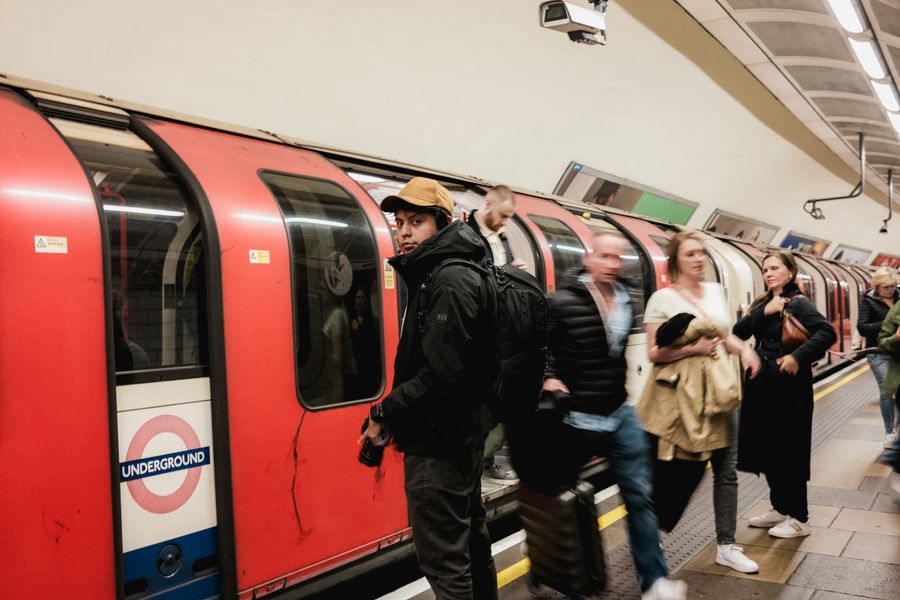
Each step trades speed for safety. None of them look good on camera, which is exactly why the footage keeps trending even though the measures are working as designed.
Is anyone actually fixing it?
The pressure is producing action, slowly. Liverpool Street’s £1.2 billion redevelopment, approved in early 2026, includes a large increase in concourse space and better step-free access, though it comes with years of disruptive building work. The rail regulator has also leaned on other hubs, requiring crowd-management improvements at Euston after safety concerns there. The honest picture is that London’s busiest stations are running near capacity every weekday, and the fixes, more space and better flow, take years to build while the crowds arrive every morning regardless.
What to do when you hit it
If you walk into a station being crowd-controlled, the useful moves are simple. Follow staff directions rather than trying to push through, since they can see platform density you cannot. Expect to be held briefly and build a few extra minutes into peak journeys. Check live service alerts before you travel, because a station may be closed to entry or being skipped by trains, and a slightly earlier or later departure often avoids the worst window entirely.
Main Takeaways
- Viral clips of packed London stations usually show crowd control working, not chaos.
- Measures include station-entry closures, controlled queues, one-way flows, and trains skipping stops.
- 51 stations across the network carried crowd-management messages between February and May 2026.
- Liverpool Street, Britain’s busiest station, is the top example and is getting a £1.2 billion rebuild.
- Follow staff, allow extra time, and check alerts, since stations may be closed to entry at peak.
For more city and transport coverage, follow the DelightfulBlogs News desk, or see our Travel section.
Frequently Asked Questions
Why do London stations close during rush hour?
When platforms get dangerously full, staff temporarily close a station to new entries so the crowd inside can clear. It is a safety measure to prevent a crush, not a fault or a strike.
What does it mean when a train skips a station?
During severe crowding, trains may be told to pass through a station without stopping, called non-stopping. It stops even more people piling onto an already unsafe platform until the crowd eases.
Is Liverpool Street the most crowded London station?
It is Britain’s busiest, with roughly 98 million entries and exits a year, and is among Network Rail and TfL’s top priorities for overcrowding relief. A major redevelopment is underway to expand it.
Are the viral crowd videos a sign of a breakdown?
Usually not. Most show crowd-management measures in action, such as controlled queues and holds. The orderly crush you see is the system deliberately slowing people down to keep platforms safe.
What should I do if a station is being crowd-controlled?
Follow staff instructions, expect to be held briefly, and allow extra time at peak. Check live alerts beforehand, since travelling slightly earlier or later often avoids the busiest window.
The Bottom Line
The next time a video of a heaving London station lands in your feed with a doom-laden caption, read it more carefully. A queue held on the pavement and a train gliding through without stopping are not signs the network has given up; they are the network refusing to let a platform become dangerous. The real problem is quieter and harder to film: stations built for a smaller city, running flat out every weekday, waiting years for the space they needed a decade ago.