
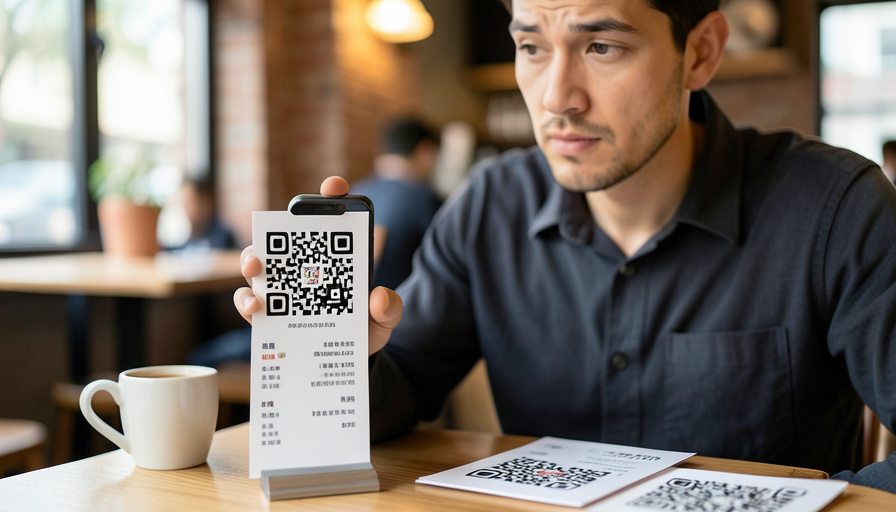
9 QR-Code Menu Red Flags That Signal a Travel Scam
You slide into a seat at a cafe in an unfamiliar city, spot the little QR code on the table, and scan it the way you have a hundred times back home. A menu should pop up. But QR-first ordering has become such a normal part of travel that scammers have started slipping fake codes into tourist zones, where a distracted, hungry visitor is the perfect target. Instead of a menu, the code can lead to a page that harvests your card details or personal information. The reassuring news is that a genuine menu behaves in very predictable ways, so the fakes give themselves away if you know what to look for. Here are nine red flags to catch before you tap anything.
The simple principle behind all of them is this: a real digital menu shows you food, and that is nearly all it does. It should not need your card to display a list of dishes, it should not force an app on you, and it should not send you to a strange website. The moment a scanned menu asks for more than it should, or behaves oddly, treat it as suspicious. Below, each red flag is a specific version of that idea, so you can spot trouble in the few seconds before you hand anything over.
The Short Version
A QR code menu is likely a scam if the code is a sticker placed over the original, if it opens a payment or login page instead of a menu, or if it asks for personal details or your card just to view the food. Be wary if it forces an app download, if the web address does not match the restaurant, if it bundles a Wi-Fi login with a card request, or if a pay screen pre-fills a large amount before you order. A loose QR card handed to you, or a page that triggers device prompts to install a profile, are also warning signs. When in doubt, ask staff for a paper menu.
Why QR menus are a travel scam target
Scanning a code for a menu feels routine, and that routine is exactly what scammers exploit. In busy tourist areas they can stick a fake QR code over a real one, or leave loose QR cards on tables, knowing that travelers are hurried, unfamiliar with the venue, and used to scanning without thinking. Because a QR code is unreadable to the eye, you cannot see where it leads until you have already opened it, and a well-made fake menu page looks convincing enough to lower your guard before it asks for a card. This is the same trick behind other quishing scams the Federal Trade Commission warns about, in which scammers hide harmful links in QR codes to steal your information. Knowing how a legitimate menu should behave is what lets you catch the fake ones fast.
This article is general travel-safety information, not legal or financial advice. Scam tactics and restaurant ordering systems vary and change, so use your judgment, follow local guidance, and if you have entered card or personal details on a suspicious page, contact your bank right away.
The 9 QR-code menu red flags
- A sticker placed over the original code. The clearest sign of tampering is a QR code that looks stuck on, with a peeling edge or slight misalignment, or one pasted over another on the table or menu. If the code appears to be an added sticker rather than a printed part of the menu, do not scan it, and ask staff for the real one.
- It opens a payment or login page instead of a menu. A real menu shows you dishes first. If scanning takes you straight to a screen demanding payment, an account login, or a sign-up before you can see any food, that is backwards and a strong warning sign. Close it, since a genuine menu never charges you just to be read.
- It asks for personal details to view the menu. A list of dishes does not need your name, email, phone number, or card to display. If the page requires personal information simply to show you the menu, treat that as a data-harvesting trap rather than a normal step, and decline to enter anything.
- It forces you to download an app. Legitimate digital menus open in your phone’s browser. If the code insists you install an app before you can see the menu, be very cautious, since a forced app download is a common way to push malicious software or capture your details. A menu should never require an installation.
- The web address does not match the restaurant. After scanning, glance at the URL before doing anything. A genuine menu uses the restaurant’s own site or a known ordering service, so a misspelled name, a random domain, a shortened link, or a missing secure https address suggests a spoofed page built to look like the real menu.
- It bundles a Wi-Fi login with a card request. Be suspicious if scanning for the menu routes you through a Wi-Fi sign-in that then asks for your payment card. A cafe does not need your card details to give you Wi-Fi or a menu, so a screen combining free Wi-Fi with a card request is a setup to capture that card.
- A pay screen pre-fills a large amount or tip. If the code leads to a payment page before you have even ordered, or one that has already filled in a suspiciously large total or tip, stop. Legitimate pay-at-table systems charge for what you actually ordered, so a pre-loaded amount is a classic bait-and-switch aimed at a distracted traveler.
- A loose QR card is handed to you. Be careful with a QR code on a small card that someone hands you or that sits loose on the table rather than being fixed and printed as part of the menu. A loose or handed card is easy for a scammer to swap in, so favor codes that are clearly a permanent part of the venue’s own materials.
- The page triggers unusual device prompts. A menu should never ask to install a configuration profile, grant broad permissions, or enable notifications and settings on your phone. If the page sets off prompts like these, deny them and close it immediately, because a simple menu has no reason to touch your device settings at all.

How to scan a menu safely while traveling
You do not have to give up QR menus, just scan them with a little care. Before you scan, look at the code itself for a stuck-on sticker or a loose card, and prefer a code that is clearly printed into the table or menu. After you scan, read the web address before tapping anything, and make sure it looks like the restaurant rather than a random or misspelled domain. Remember what a menu should and should not do: it shows food, and it should never demand your card, personal details, an app install, or device permissions just to be viewed. If any of that happens, back out and simply ask a staff member for a paper menu or the correct link, which any real restaurant will happily provide. When it is time to pay, use the venue’s normal system or pay in person, and never send money by gift card, transfer, or an odd link. Scan thoughtfully and a fake menu never gets the chance to take anything.
Main Takeaways
- A real QR menu shows food and little else, so anything demanding your card or details just to view it is a red flag.
- Check the code for a stuck-on sticker or a loose handed card, and prefer one printed into the table or menu.
- Read the web address after scanning, and be wary of misspelled or random domains and missing https.
- Never accept a forced app download, a Wi-Fi login paired with a card request, or a pay screen with a pre-filled amount.
- When anything looks off, back out and ask staff for a paper menu, and report a scam to the authorities.
For more travel-safety and scam guides, browse the DelightfulBlogs Travel section, or see our guide to the QR-code parking payment scam.
Frequently Asked Questions
Can a QR code menu really be a scam?
Yes. Scammers place fake QR codes over real ones or leave loose QR cards in tourist areas, and scanning them can lead to a page that harvests your card or personal details rather than showing a menu. The genuine code shows food, while the fake one asks for more than it should. Checking the code for tampering and reading the web address after scanning is how you avoid the trap.
What should a legitimate QR menu never ask for?
A real digital menu should never require your payment card, personal details, an app download, or device permissions just to display the food. It simply opens a menu in your browser. If a scanned code demands any of those before you can see dishes, or sends you to a login or payment screen first, treat it as a scam and ask staff for a paper menu or the correct link instead.
How do I check if a QR menu link is safe?
After scanning, look at the web address before you tap anything. A safe menu uses the restaurant’s own website or a recognized ordering service, so watch for misspellings, a random or unrelated domain, a shortened link, or a missing secure https connection. If the address does not clearly match the restaurant, do not enter any information, and confirm the correct link with a staff member.
Is it safe to pay through a QR code at a restaurant abroad?
It can be, if the code is the venue’s genuine system and the payment page matches what you ordered. Be cautious of a pay screen that appears before you order or pre-fills a large amount or tip, and never pay by gift card, transfer, or an unfamiliar link. When unsure, pay in person or with the staff directly, which avoids handing your card details to a possibly fake page.
What do I do if I already scanned a fake menu code?
If you only opened the page and entered nothing, close it and you are likely fine. If you entered card or personal details, contact your bank or card issuer immediately to protect the card and watch for unfamiliar charges, and change any password you shared. Report the scam to the authorities, such as the FTC at ReportFraud.ftc.gov, and tell the restaurant so they can remove the fake code.
The Bottom Line
QR code menus are convenient, and most are perfectly genuine, but while traveling it pays to scan with your eyes open. Hold onto the simple rule that a real menu shows you food and nothing more, so a code that arrives on a stuck-on sticker, sends you to a payment or login page, or demands your card, an app, or device permissions is waving a red flag. Glance at the code and the web address before you trust either, and when anything feels off, just ask for a paper menu. Do that, and a fake QR code becomes a harmless square you simply chose not to scan, rather than the start of a ruined trip.