
PISA 2025 Results Renew Concern Over Global Learning Decline
The 2025 PISA scores are the weakest the OECD has ever recorded. The louder question in staff rooms is what to actually do about them.
Every three years, one set of test scores manages to make education ministers sweat. The 2025 results from PISA landed on September 8, and this round the numbers were grim enough that the usual reassurances ran thin. Reading and math across the wealthy world are now at the lowest point the program has ever measured.
That is the headline everyone repeated. The more useful story sits underneath it: what teachers, principals, and ministries are now arguing about doing next.
In Brief
PISA 2025 tested roughly 760,000 fifteen-year-olds across 91 education systems. Across OECD countries, reading scores have dropped 28 points since 2015 and math 22 points, which the OECD frames as about a year and a half of lost learning in reading alone. Both are record lows for the program. Science, the featured subject this cycle, held steady after years of slippage. Officials point to screen time, shrinking attention spans, heavy AI use, and a teacher shortage. The harder part, and the reason educators are still fighting about it, is which fixes are worth the money and the political capital.
Table of Contents
What the 2025 PISA Results Actually Show
PISA, the Programme for International Student Assessment, measures how well 15-year-olds apply reading, math, and science to real-world problems rather than how much they can recite. The 2025 cycle was the biggest yet: about 760,000 students in 91 countries and economies, 38 of them OECD members.
The reading drop is the part that stings. Average reading performance across the OECD fell 28 points against 2015, which the OECD translates to roughly a year and a half of schooling. Math slid 22 points over the same stretch, a little more than a year. Read that plainly and it means a typical 15-year-old today works at the level a slightly younger student did a decade ago. You can see the full breakdown in the OECD’s PISA 2025 Results (Volume I).
Science was the one steady line. It was the spotlight subject this round, and average science scores held between 2022 and 2025 after drifting down through the 2010s. Small comfort, but educators will take a flat line where they can get one.
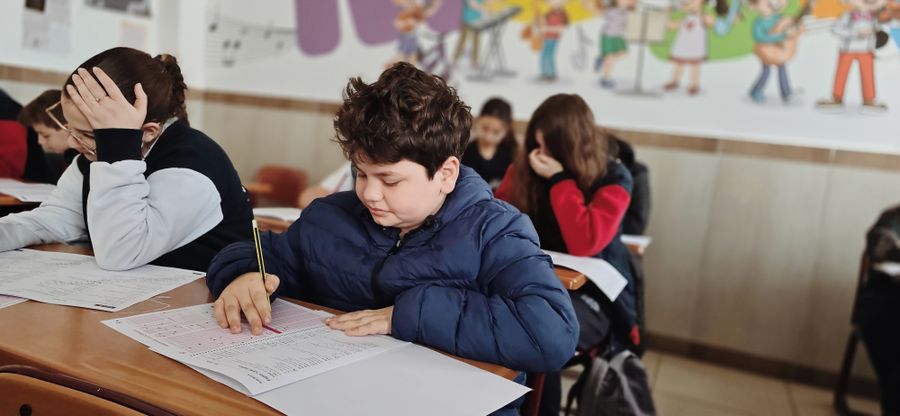
The United States landed in an odd spot. Its 15-year-olds scored 490 in reading, down 14 points since 2022 but still above the OECD average of 461, good for 13th among participating systems in reading and science and 27th in math. Education Secretary Linda McMahon flagged a different worry in those numbers, telling reporters this is now “the largest performance gap between top-performing and bottom-performing students in reading anywhere in the world,” according to K-12 Dive’s breakdown of the results. A decent average can hide a widening split.
Why This Round Landed Harder
Two things made 2025 hit differently. The scores are genuinely the worst the program has logged, so the comforting “blip after the pandemic” line no longer works. The slide was already underway well before 2020, and it kept going after schools reopened.
The suspected causes are also woven into everyday life now, which makes them harder to wave away. Andreas Schleicher, who runs the OECD’s education work, tied the reading decline to how teenagers process information, saying students are “less likely to think deeply and separate signal from noise.” The report links more than three hours of daily screen time to lower scores and describes a shift from making things online to passively scrolling through them.
Actually, before the AI panic takes over, one caution worth stating clearly. The report does not claim chatbots caused the drop; the trend predates them by years. What it flags is that heavy, unguided AI use could deepen a habit that was already forming. Jonathan Seiden, a researcher at Vanderbilt, put it bluntly, warning that AI tutoring tools are “not magic bullets” and cannot stand in for a good teacher.
What Educators Are Actually Weighing
Here is where the real disagreement starts. A ranking table tells you who is falling. It says nothing about what to change on Monday morning. A handful of themes are dominating staff-room and ministry conversations right now.
- Phone-free classrooms. A growing number of systems are restricting phones during the school day. It is cheap and politically popular, though the evidence on how much it moves scores is still being gathered.
- Reading instruction. Several ministries are pushing back toward structured, content-rich reading over the skim-and-search habits that screens reward.
- The teacher pipeline. The staffing shortage keeps getting named as a root cause, not a side issue. It is also the slowest and most expensive thing on this list to fix.
- Guardrails on classroom AI. Districts are writing rules so that tools support practice instead of quietly replacing the thinking a student is supposed to do.
None of these is a silver bullet, and that is the honest problem. The systems that held their scores this cycle tended to do unglamorous things consistently: stable curricula, supported teachers, less churn at the top. The union-backed group Education International also tied the results to the chronic teacher shortage, which points at pay and working conditions rather than a quick classroom tweak.
What To Watch Out For
- Do not read the league table as a report card on one policy. Teaching is one input among several; scores also move with demographics and how the sample was drawn.
- Be skeptical of anyone selling a single cause. Screens, AI, staffing, and curriculum all show up in the data at once.
- Rankings can mislead. A system can climb the table while its actual scores fall, simply because others fell faster.
What To Know
- PISA 2025 recorded the lowest OECD averages in reading and math since the program began.
- Reading fell 28 points and math 22 points across the OECD since 2015.
- Science, the featured subject, stayed stable after a decade of decline.
- Screen time, attention, AI habits, and teacher shortages are the leading suspects.
- The fixes on the table, whether phone bans or reading reform, are contested and slow to show results.
For more coverage of schools, study skills, and learning trends, browse the DelightfulBlogs Education section, or follow the wider story through our News desk.
Frequently Asked Questions
What is PISA and who takes it?
PISA is the OECD’s Programme for International Student Assessment. Every three years it tests a sample of 15-year-olds on how well they use reading, math, and science to solve real problems. The 2025 round covered about 760,000 students across 91 education systems.
Did the pandemic cause the PISA decline?
No, at least not on its own. Scores were already falling before 2020 and kept sliding after schools reopened. The pandemic likely accelerated a trend that started years earlier, which is part of why the 2025 results worried officials so much.
How did the United States do in PISA 2025?
US 15-year-olds scored 490 in reading, down 14 points since 2022 but above the OECD average of 461. They ranked 13th in reading and science and 27th in math. The bigger concern was the widening gap between the highest and lowest performers.
Is screen time really behind the lower scores?
The report links more than three hours of daily screen time to lower performance, and it connects the reading slide to shorter attention spans. Researchers are careful to call these contributing factors, not a single proven cause.
What are schools doing in response?
Common moves include restricting phones during the school day, returning to structured reading instruction, addressing teacher shortages, and setting rules for how AI tools are used in class. Most systems are trying several at once.
What This Means
Strip away the ranking drama and PISA 2025 is really a story about attention and staffing, two things that resist quick fixes. The scores confirm a slide that started before the pandemic and outlasted it, and they hand every education minister the same uncomfortable homework. The country that improves next will not be the one with the loudest reaction to this report. It will be the one that picks two or three unflashy changes and sticks with them long enough to show up in the 2028 numbers.