
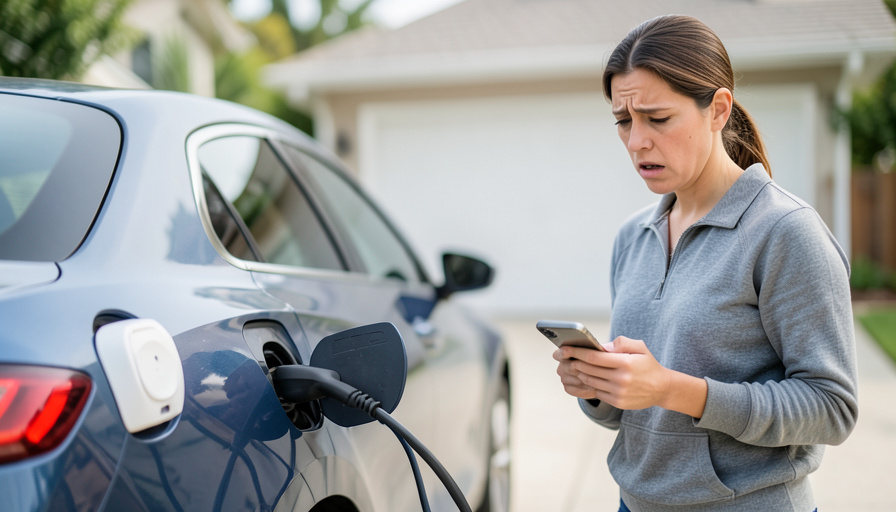
Why Your EV Shows Not Charging While Plugged In
You plug in your EV, expect to see the charge light pulse, and instead the screen delivers a small gut punch: Not Charging. The cable is seated, the port light might even be on, and yet nothing is flowing. Your mind jumps to the worst, a dead charger or a failing battery, but take a breath. A plugged-in EV that will not charge is one of the most common and least alarming issues in electric driving, and the cause is almost always something simple you can fix in a couple of minutes. Yes, an EV can absolutely show Not Charging while plugged in, and here is what is really going on.
The thing to understand is that plugging in the cable is only the first step. For power to actually flow, several conditions have to line up at once: the car and charger have to complete a handshake, a public station has to authorize your session, the battery has to want more charge, and no schedule can be telling it to wait. When any one of those is missing, you get exactly this, a connected cable and a stubborn Not Charging message. Work through the checklist below and the culprit usually reveals itself quickly.
The Short Answer
Yes, an EV commonly shows Not Charging while plugged in, and it is usually an easy fix rather than a fault. The most frequent home causes are a scheduled charge set to start later and a charge limit the battery has already reached. Beyond that, make sure the connector is fully latched, unplug and replug to restart the handshake, and at a public station confirm your payment authorized and the unit is online. Also rule out a tripped breaker, a very cold battery, or a charge current set too low. Only rarely is the car or charger actually broken.
Why plugged in does not always mean charging
Charging an EV is a negotiation rather than a simple connection. When you plug in, the car and the charging equipment exchange signals to agree on how much power to deliver, and only then does electricity flow. That handshake can stall if the connector is not fully seated, if a public station has not authorized your payment, or if the car has a reason not to accept a charge, such as a full-enough battery or a schedule telling it to wait for cheaper overnight rates. Cold weather, a tripped breaker, or a current setting turned down can all interrupt it too. In other words, a healthy plugged-in EV can sit at Not Charging for perfectly ordinary reasons, which is why the fixes below are mostly about checking settings and reconnections, not repairs. The basics of how home equipment delivers that power are covered in the Department of Energy’s overview of charging electric vehicles at home.
This article is general troubleshooting information, not vehicle or electrical advice. EV and charger behavior varies by make, model, and equipment, so follow your vehicle and charger maker’s current guidance, and have any electrical work, wiring, or a suspected fault handled by a qualified professional rather than attempting a repair yourself.
The checklist to get charging started
- Check for a scheduled charge or departure time. This is the single most common home cause: your car is set to charge later, often for off-peak rates, so it sits plugged in and idle until then. Open your vehicle’s charging settings or app and look for a schedule or departure time, and either wait for it or start charging now to override it.
- Check your charge limit. If the battery has already reached the limit you set, such as eighty percent, the car will not add more and may show Not Charging. Look at your target charge level in the car or app, and raise it if you actually want more range, since the vehicle is simply doing what you told it.
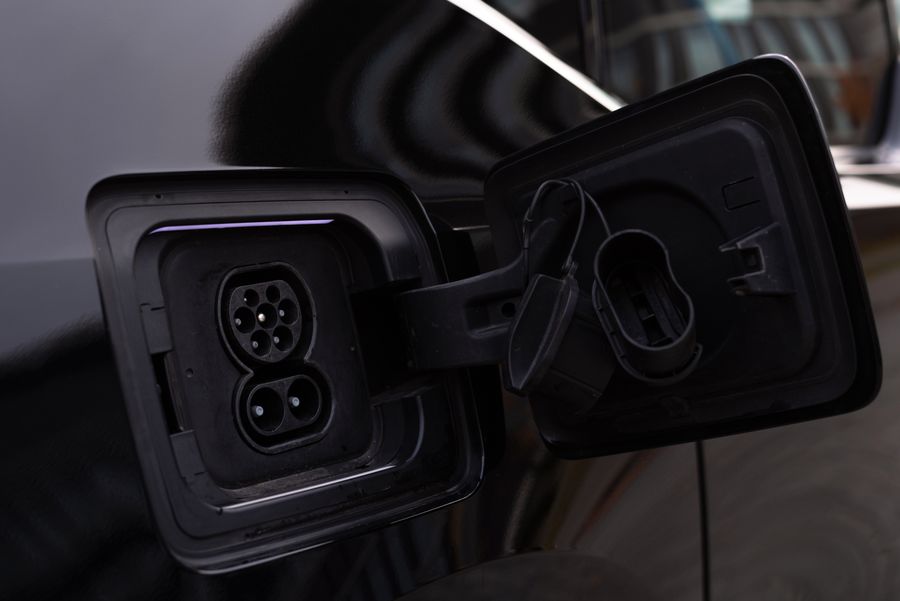
- Reseat the connector until it fully latches. A plug that looks in but is not fully seated will not start a session. Firmly push the connector into the port until it clicks or latches, and check that the car recognizes it. A slightly loose connection is a surprisingly frequent reason charging never begins.
- Unplug and replug to restart the handshake. If the connection is good but the session never started, the handshake may have stalled. Unplug the cable, wait a few seconds, and plug it back in firmly to trigger a fresh negotiation between the car and the charger, which restarts many stuck sessions.
- At a public station, confirm your session authorized. Public charging needs payment or account authorization to begin, so check that your app, card, or tag actually started the session and that the station is online and not showing a fault. The Department of Energy’s guide to public charging stations is a useful primer, and if one unit is unresponsive, try another.
- Check any adapter is fully seated and compatible. If you are using an adapter between connector standards, make sure it is pushed all the way in on both ends and that it is rated for the station and your car. A partly seated or unsupported adapter can leave you plugged in with no charge flowing.
- Rule out a tripped breaker or a charger fault at home. If a home unit shows no light or an error, check whether its circuit breaker or a GFCI has tripped, and reset it if safe to do so. Read the charger’s status lights against its manual, since a fault there, not the car, may be the reason nothing is happening.
- Consider a very cold battery. In cold weather, an EV may pause or slow charging to protect a cold battery until it warms, especially at fast chargers. If it is freezing out, give it time, or use your car’s preconditioning feature before charging so the battery is ready to accept power.
- Check the charge current setting. Some cars and apps let you set the charging amperage, and if it has been turned down very low or to zero, charging can appear to stall. Look for a charging current or amps setting and make sure it is at a normal level for your equipment.
- Power-cycle the car and inspect the hardware. If everything looks right, restart the vehicle’s systems, since a software glitch can cause a false Not Charging. Also inspect the port and cable for debris or damage, and try a different cable or station to work out whether the issue is the car or the charger.
Main Takeaways
- An EV showing Not Charging while plugged in is common and usually a quick fix, not a fault.
- The top home causes are a scheduled charge set to start later and a charge limit the battery has already hit.
- Make sure the connector is fully latched, and unplug and replug to restart a stalled handshake.
- At public stations, confirm your payment authorized and the unit is online, and check any adapter is fully seated.
- Rule out a tripped breaker, a very cold battery, or a low charge current before assuming the car or charger is broken.
For more EV and driving guides, browse the DelightfulBlogs Automotive section, or see our guide to how EV home-charger demand charges work.
Frequently Asked Questions
Why does my EV say Not Charging when it is plugged in?
Usually because a condition for charging is not met, not because anything is broken. The most common reasons are a scheduled charge set to start later, a charge limit the battery has already reached, a connector that is not fully seated, or a stalled handshake between the car and charger. At a public station, an unauthorized payment is often the cause. Checking those settings and reseating the plug resolves most cases.
Could a charge schedule be stopping my EV from charging?
Yes, and it is the most common home cause. Many EVs let you schedule charging for off-peak hours or a set departure time, so the car stays plugged in but idle until then, which reads as Not Charging. Open your charging settings in the car or app, look for a schedule or departure time, and either wait for it or choose to charge now to start immediately.
Why won’t my EV charge at a public station even though it is plugged in?
Public charging requires your session to be authorized, so if your app, card, or tag did not successfully start and pay for the session, no power flows. The station may also be offline or showing a fault. Confirm the session actually started, check the unit’s screen for errors, make sure any adapter is fully seated, and if one charger is unresponsive, try another at the same location.
Does cold weather stop an EV from charging?
It can slow or pause it. A very cold battery may limit how much charge it accepts to protect itself, especially at fast chargers, so charging can appear stalled until the battery warms. Using your car’s preconditioning feature before you charge warms the battery so it can accept power, and in mild cases simply giving it a little time resolves the slow start.
When should I worry that the car or charger is actually broken?
Only after the simple checks fail. If you have confirmed there is no schedule or charge limit in the way, reseated and reconnected the cable, ruled out a tripped breaker, and tried another cable or station with the same result, then a genuine fault becomes more likely. At that point, note any error messages and contact your vehicle or charger maker’s support, or have a qualified professional inspect the equipment.
The Bottom Line
Seeing Not Charging while your EV is plugged in feels like a problem, but it is far more often a message than a malfunction. The car is usually telling you that a schedule is holding it back, the battery is already at its limit, the plug needs a firmer seat, or a public session never authorized. Run down the checklist, starting with your charge schedule and limit, then the connector and the handshake, and power almost always begins to flow. Save the worry, and the call to support, for the rare case where every simple fix comes up empty.