
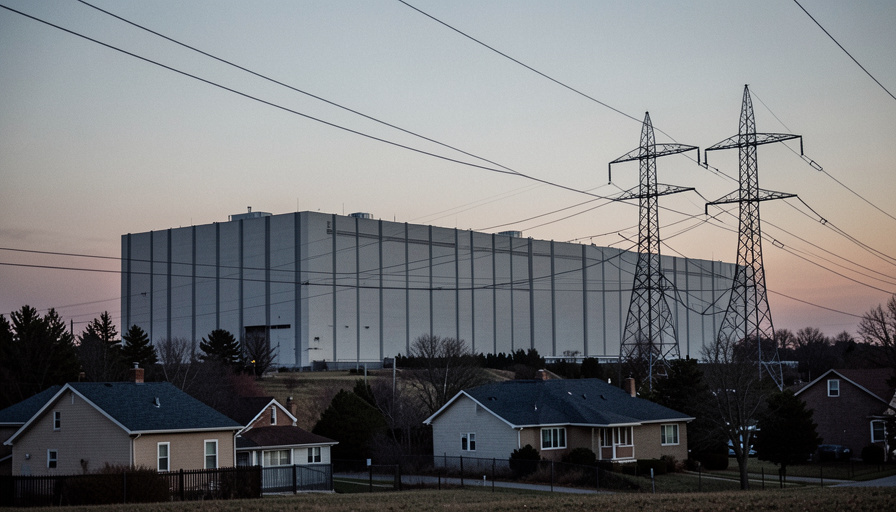
The Data Center Boom Becomes a Local Fight Over Power and Water
The AI data center boom stopped being a national story and became a fight over your water and your power bill.
The record run of giant data centers reads like a tech story until one is proposed down the road from you. Then it turns into a very local argument about your electric bill, your water supply, and what gets built beside your neighborhood. That shift, from abstract boom to backyard fight, is the real story of the buildout in 2026.
In Brief
The wave of 100-megawatt-plus data centers is now colliding with the communities that host them. Residential electricity prices rose about 11.5% in 2025 and could climb up to 40% by 2030, with data centers projected to drive 44% of new US power demand by 2028. Cooling can consume millions of gallons of water, and in one Oregon city nearly a third of municipal water use was tied to a single company’s data centers. Seven in ten Americans now say they do not want one near their home, and opposition has blocked or delayed a record volume of projects.
Table of Contents
The Bill Problem
The first place people feel the boom is the utility statement. Residential electricity prices rose roughly 11.5% in 2025, and some forecasts put the increase at up to 40% by 2030 compared with 2025. Data centers are a big reason: they are projected to account for about 44% of new US electricity demand by 2028, and in wholesale markets like PJM, capacity prices spiked many times over, a cost that flows down to household bills, as energy analysts have documented.
The uncomfortable part for residents is that they did not sign up for the extra demand, yet they share the grid that has to pay for meeting it.
The Water Problem
Power gets the headlines, but water is often the sharper local wound. Many large data centers use millions of gallons for cooling, and the true footprint is even bigger once you count the water used to generate their electricity. In one Oregon city, nearly 30% of municipal water consumption was traced to a single company’s data centers, whose usage had tripled over five years, according to reporting on local water resources.
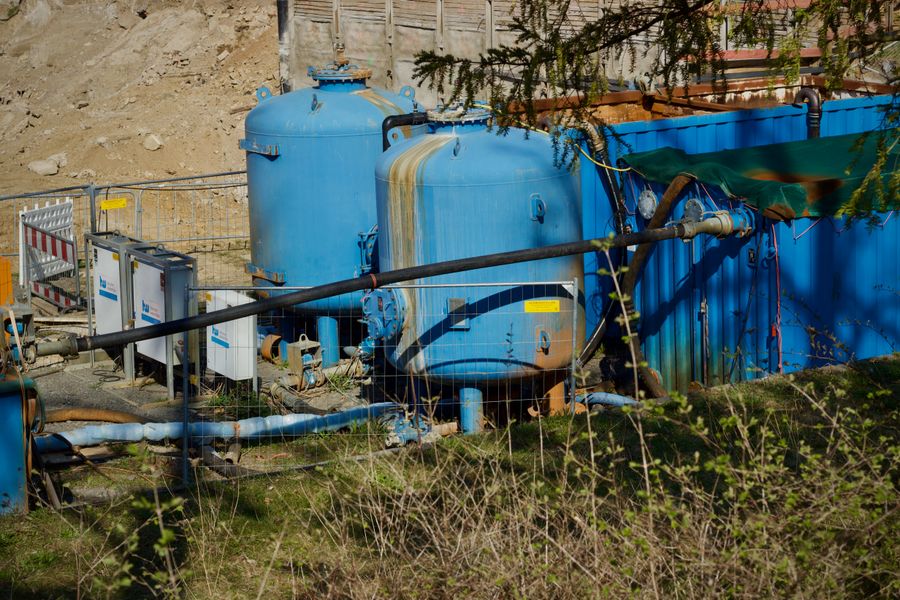
In a wet region that may be manageable. In a drought-prone one, a facility quietly drinking a third of the town’s water is the kind of fact that turns a routine zoning meeting into a packed one.
The Backlash
Public opinion has hardened fast. Roughly seven in ten Americans say they oppose building AI data centers in or near their communities, and a survey in the Houston area found 63% opposed having one within a mile of home. The organizing has followed: active opposition groups more than doubled to 833 across 49 states, and NBC News reported that the value of projects blocked or delayed in early 2026 rivaled the total for all of the prior year.
Why It’s a Local Fight
Here is the structural reason this keeps landing at the town level: most of the decisions are made there. Permitting and zoning are largely local powers, so a city council or county board can slow or stop a project even as national demand surges. State legislatures are catching up, with moratorium bills introduced in about a dozen states and municipalities passing their own construction pauses. Some places are also rethinking the tax breaks that lured the facilities, with Illinois moving to pause certain data-center incentives amid the bill-and-water debate.
Key Takeaways
- Data centers are projected to drive about 44% of new US electricity demand by 2028, pressuring household bills.
- Residential power prices rose around 11.5% in 2025 and could rise up to 40% by 2030.
- Cooling can use millions of gallons of water; one Oregon city tied ~30% of its water use to a single operator.
- About 7 in 10 Americans oppose a data center near their home, and opposition groups have more than doubled.
- Most permitting is local, so towns and states are increasingly able to slow or block projects.
For more on technology and infrastructure, browse the DelightfulBlogs Tech section, or read related coverage in our Business section.
Frequently Asked Questions
Do data centers raise electricity bills?
They can. Data centers are projected to drive a large share of new US power demand, and rising wholesale and capacity costs to serve that demand are passed through to household bills in many regions.
How much water do data centers use?
Large facilities can use millions of gallons for cooling, and the total is higher once water used to generate their electricity is counted. In one Oregon city, nearly a third of municipal water use was tied to a single company’s data centers.
Why do communities oppose data centers?
The main concerns are higher electricity bills, strain on local water supplies, noise, and land use. Surveys show a strong majority of Americans do not want a data center built near their homes.
Can a town actually stop a data center?
Often yes. Because permitting and zoning are largely local, city and county boards can delay, condition, or reject projects, and many have imposed construction pauses in 2026.
Are states regulating data centers?
Increasingly. Moratorium bills have been introduced in about a dozen states, and some, like Illinois, are revisiting the tax incentives that attracted data centers in the first place.
What To Do Next
If a data center is proposed near you, the pressure points are local and knowable: the zoning hearing, the water-use permit, and the tax agreement your town signs. Read those documents before the ribbon-cutting, not after. The national boom will keep rolling regardless, but whether a specific project raises your bills or drains your reservoir is decided in rooms most residents never used to attend, and that is exactly where the fight has moved.