
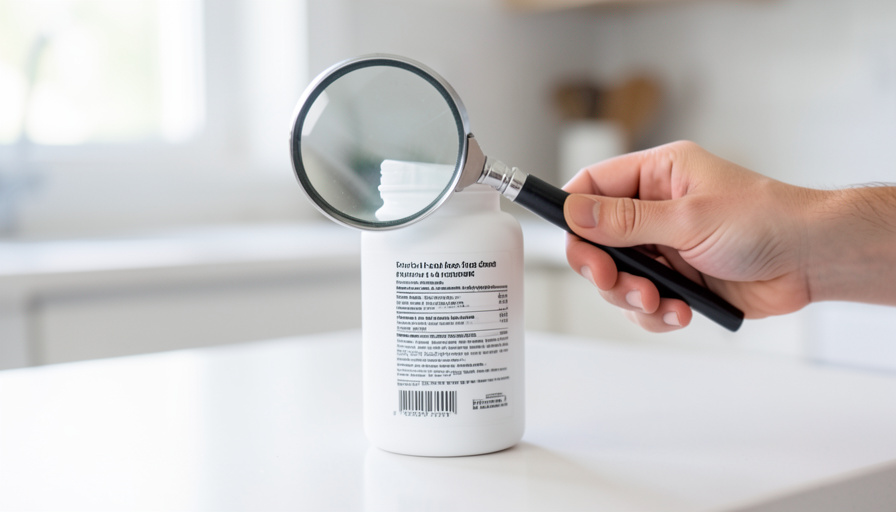
12 Supplement Label Scam Tactics That Hide Underdosing
The front of the bottle promises the world: “Extra Strength,” “Clinically Studied,” a hero ingredient in bold. Flip it over, squint at the Supplement Facts panel, and a quieter story often emerges, one where the ingredient you are actually paying for shows up in a trace amount, or is hidden so you cannot tell how much is in there at all. Supplements are regulated far more loosely than medicines, which leaves room for label tricks that are legal but deeply misleading. Here are twelve tactics used to hide underdosing, and how to read past each one.
None of this means every supplement is a scam, but it does mean the label is doing marketing work as much as informing you. The good news is that once you know the tactics, you can spot them in seconds on the back panel, and stop paying premium prices for pixie dust. Learn to read the Supplement Facts, not the front-of-bottle hype, and you take back the advantage.
The Short Version
The most common ways supplement labels hide underdosing are proprietary blends that list only a total weight, fairy dusting a trendy ingredient below its effective dose, and amino spiking protein powders to inflate the protein number. Add inflated serving sizes, naming a clinically studied ingredient at a fraction of the studied dose, exploiting the descending-order ingredient listing, vague “up to” potency claims, cheap poorly-absorbed nutrient forms, meaningless front-label buzzwords, hidden fillers, fake quality seals, and deceptive serving math. The defense is the same for all of them: ignore the front, read the Supplement Facts panel, and check the amounts against known effective doses.
Why supplement labels can legally mislead you
Dietary supplements are overseen far more loosely than prescription drugs, and are not reviewed for effectiveness before they go on sale, as the FDA explains. That gap leaves room for labels that are technically truthful yet designed to mislead, and the favorite trick is disguising how little of the expensive, effective ingredient is actually inside. The one document that cannot lie to you the same way is the Supplement Facts panel, whose format the FDA’s labeling rules govern. Learning to read that panel, and knowing roughly what an effective dose looks like, is what turns the tactics below from invisible into obvious.
This is general consumer information, not medical advice. Supplements are not evaluated for safety and effectiveness the way drugs are, and individual needs vary, so talk to a doctor or pharmacist before starting any supplement, especially if you take medications or have a health condition, and do not exceed recommended doses.
The 12 tactics, and how to spot them
- Proprietary blends. A “proprietary blend” lists several ingredients under one total weight without saying how much of each, so a blend could be almost entirely a cheap filler with a sprinkle of the good stuff. If a label hides the individual amounts this way, treat the exciting ingredients as unknown quantities.
- Fairy dusting. Also called pixie dusting, this means including a trendy, marketable ingredient at a dose far below what studies use, just enough to name it on the label. The ingredient is technically present but at a level unlikely to do anything, so check the amount against the researched effective dose.
- Amino spiking in protein powders. Cheap free amino acids or nitrogen-rich compounds can be added so that a standard protein test reads higher than the actual complete protein content. If a budget protein claims a suspiciously high number, look for added individual aminos padding the total.
- Inflated serving sizes. Making the serving two or three scoops or capsules lets the label show big numbers, when a single scoop is underdosed. Always check how many units make up one serving, and do the math per scoop, since the impressive figure may require a triple dose.
- Naming a studied ingredient at a token dose. A label may proudly cite a “clinically studied” branded ingredient while including only a fraction of the amount the study used. The name lends credibility the dose does not earn, so verify the actual milligrams against the clinical dose.
- Exploiting the ingredient order. On the Supplement Facts panel, ingredients within a blend are typically listed in descending order by weight, so a hero ingredient near the bottom of the list is present in a tiny amount. Where amounts are hidden, the position hints at how little is really there.
- Vague “up to” claims. Phrases like “up to 1,000 mg” or “potent dose” promise a ceiling without guaranteeing a floor, so you might get far less. Look for a specific, stated amount per serving, and be skeptical of any potency claim that avoids a firm number.
- Cheap, poorly-absorbed forms. A label can hit a big milligram figure using an inexpensive, low-absorption form of a nutrient, so the number looks good while the usable dose is small. The specific form matters, so learn which forms of a given nutrient are well absorbed before judging by the raw milligrams.
- Meaningless front-label buzzwords. Terms like “Extra Strength,” “Clinical Grade,” or “Pharmaceutical Grade” have no standardized legal meaning on a supplement and tell you nothing about the dose. Ignore the adjectives on the front and let the amounts on the back panel be your guide.
- Hidden fillers and bulk. When the “other ingredients” list is long and the active amount is small, much of each capsule is filler, binder, or flow agent rather than the product you wanted. Compare the active dose to the overall size to see how much of what you swallow is actually working.
- Fake or unverifiable seals. Official-looking badges and “lab tested” claims are not the same as genuine independent verification. Look for real third-party testing marks from recognized programs, and be wary of impressive seals that name no verifiable certifier.
- Deceptive serving and count math. A bottle claiming “90 servings” may assume a serving far below the effective dose, or a “60 count” at two per day is only a month’s supply. Work out the real cost per effective dose, not per capsule, to compare products honestly.
- Burying the real dose in a big label. Some products surround a small active dose with a crowd of trace ingredients and bold claims, so the panel looks packed while the thing you care about is minimal. Focus on the one or two ingredients that matter and confirm their amounts, ignoring the noise around them.

How to read a supplement label with clear eyes
A quick routine cuts through most of the tricks. Turn the bottle over and read the Supplement Facts panel first, ignoring every claim on the front. Find the ingredient you actually want and check its specific amount per serving, then see how many capsules or scoops make up that serving, since the numbers only count per full serving. Watch for the word “blend,” which usually means the individual amounts are hidden, and compare the listed dose to the effective dose reported for that ingredient. Note the form of key nutrients, look for genuine third-party testing rather than decorative seals, and calculate the cost per effective dose rather than per bottle. If a product hides its amounts, leans on buzzwords, or needs a triple serving to look strong, put it back. And because supplements interact with medications and conditions, run anything new past a doctor or pharmacist before you start.
Main Takeaways
- Supplements are loosely regulated, so labels can be technically truthful yet designed to hide how little effective ingredient is inside.
- Proprietary blends, fairy dusting, and amino spiking are the top ways underdosing is disguised, so read the Supplement Facts panel, not the front.
- Check the amount per serving, how many units make a serving, and the nutrient form, rather than only the headline milligrams.
- Ignore meaningless buzzwords like “Clinical Grade,” and look for real third-party testing rather than decorative seals.
- Compare cost per effective dose, and talk to a doctor or pharmacist before starting any supplement.
For more health and nutrition guides, browse the DelightfulBlogs Health & Fitness section, or see our guide to MyFitnessPal alternatives with free barcode scanning.
Frequently Asked Questions
What is a proprietary blend on a supplement label?
A proprietary blend groups several ingredients under a single total weight without disclosing how much of each is included. That lets a manufacturer keep the recipe secret, but it also hides underdosing, since a blend could be mostly a cheap ingredient with only a trace of the one you want. When you see a blend, treat the individual amounts as unknown and be cautious.
What is fairy dusting in supplements?
Fairy dusting, or pixie dusting, is including a trendy or impressive-sounding ingredient at a dose far below the amount shown to be effective in studies, purely so it can be listed on the label. The ingredient is present but at a level unlikely to have any real benefit. Checking the stated amount against the researched effective dose reveals it quickly.
How can I tell if a protein powder is amino spiked?
Amino spiking adds cheap free amino acids or nitrogen-rich compounds so a standard test reads a higher protein number than the actual complete protein. Watch for a budget powder claiming a very high protein figure, and check whether individual amino acids are listed separately in a way that pads the total. Third-party tested protein is the more reliable choice.
Do front-label terms like “Clinical Grade” mean anything?
Generally no. Phrases like “Extra Strength,” “Clinical Grade,” and “Pharmaceutical Grade” have no standardized legal meaning on a dietary supplement and say nothing about the actual dose. They are marketing language. Ignore the adjectives on the front of the bottle and judge the product by the specific amounts listed on the Supplement Facts panel instead.
How do I know a supplement is actually third-party tested?
Look for verification marks from recognized independent programs, rather than vague “lab tested” text or official-looking badges the company made itself. Genuine third-party testing means an outside organization has checked the product’s contents. If a label shows an impressive seal but names no verifiable certifier, treat the quality claim with skepticism and look for a product with real independent verification.
The Bottom Line
Supplement labels are built to sell, and the loose rules around them leave plenty of room to make a cheap product look potent while hiding how little of the good stuff is inside. The twelve tactics here all live on the front of the bottle and in vague blends; the truth lives on the Supplement Facts panel. Flip the bottle over, find the ingredient you actually want, check its real amount and form against a known effective dose, and skip anything that hides its numbers. Read labels this way, and you pay for supplements that work, not for clever packaging.