
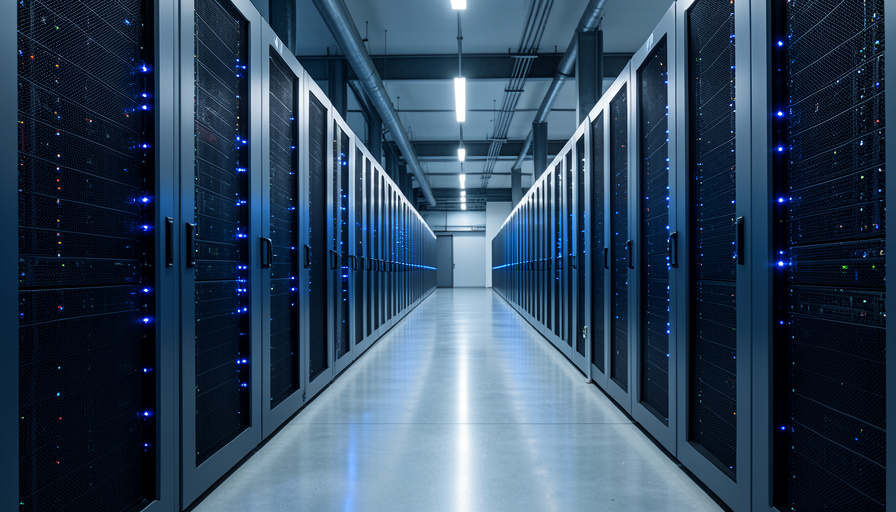
Why 100-Megawatt Data Centers Are Multiplying Across the US
A decade ago, 100 megawatts was the number that described an entire enormous data center. Now it describes a single AI training hall, and sites drawing that much power or more are being built across the country. That shift in what “big” means is the real story behind the data center boom.
The easiest way to miss how fast AI infrastructure is scaling is to keep using old reference points. A data center campus that drew 100 megawatts used to be a landmark, the kind of facility a utility planned around for years. That figure has quietly become a baseline rather than a ceiling, and the reason is simple: the machines inside changed. Training and running large AI models takes so much power that a single hall now pulls what a whole campus used to, and the buildout is racing to keep up.
In Brief
A single hyperscale AI training cluster can draw around 100 megawatts, roughly the electricity of a small city, and modern AI-focused sites are being designed for anywhere from 100 to 750 megawatts each. That is why 100MW-plus facilities are multiplying: the threshold that once defined a massive data center now defines one room inside a larger one. Industry forecasts have the sector nearly doubling, with close to 100 gigawatts of new capacity added globally between 2025 and 2030, and US power demand from data centers projected to double by 2027. The bottleneck is no longer chips or money. It is electricity, land, and grid connections.
What the 100MW milestone actually means
The shift is about density more than size. In a conventional data center, power is spread across a huge floor of servers doing ordinary cloud work. An AI training cluster concentrates it: thousands of specialized chips packed together, running flat out, generating enormous heat and demand in a compact space. A single one of those training halls can draw about 100 megawatts, which is why the industry now talks casually about 100MW as a unit of one building block. Full AI campuses stack several of them, which is how you get to sites planned for hundreds of megawatts and, increasingly, into gigawatt territory.
Put plainly, 100 megawatts stopped being the size of the data center and became the size of a component. When the component is that large, the facilities holding them multiply quickly, because each new AI project needs its own.
The numbers behind the boom
The growth figures are steep even by tech standards. JLL’s data center outlook projects nearly 100 gigawatts of new capacity added between 2025 and 2030, effectively doubling the sector and pushing global capacity toward 200 gigawatts by the end of the decade, at a compound growth rate around 14 percent. In the US specifically, Goldman Sachs has projected that data center power demand will double by 2027. Building the capacity is expensive too: JLL pegs average construction cost rising to around $11.3 million per megawatt in 2026, which means a single 100MW hall represents on the order of a billion dollars of construction alone.
Why AI is the engine
None of this is happening because ordinary internet use suddenly spiked. It is AI. Training frontier models requires vast, power-hungry clusters, and the industry expects AI to account for roughly half of all data center workloads by 2030. There is a second wave coming behind training, too: as more people use AI tools day to day, the demand shifts toward inference, the work of actually running models to answer queries. Analysts expect inference to overtake training as the dominant AI workload around 2027, which means the power draw does not taper off once the big models are trained. It broadens.
The real bottleneck is power
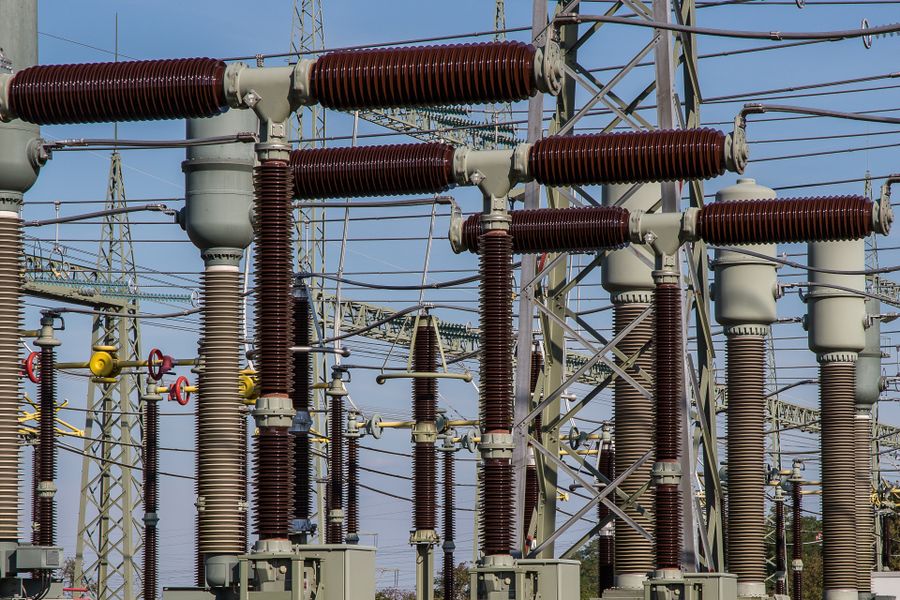
Here is what changes when your building block is 100 megawatts: the hard part is no longer the technology. It is getting the electricity to the site. A cluster that draws as much as a small city cannot simply plug in; it needs new substations, transmission upgrades, and a utility willing and able to deliver that load, sometimes years out. This is why data center siting has become a story about the power grid, about which regions have spare generation and transmission, and about the strain that concentrated demand places on local electricity systems. The chips exist and the money exists. Whether the grid can feed a rapidly multiplying fleet of 100MW-plus sites is the open question.
Key Takeaways
- A single AI training hall now draws about 100 megawatts, roughly a small city’s worth of power, so 100MW is a component size rather than a whole facility.
- AI-focused sites are being designed for 100 to 750 megawatts each, and campuses stack multiple halls into gigawatt-scale projects.
- Industry forecasts see nearly 100 GW of new capacity added globally from 2025 to 2030, with US data center power demand projected to double by 2027.
- Construction runs around $11.3 million per megawatt in 2026, putting a single 100MW hall near a billion dollars to build.
- The binding constraint is electricity and grid connection, not chips or funding.
For more technology coverage, browse the DelightfulBlogs Tech section, or follow our News desk.
Frequently Asked Questions
Why do AI data centers need so much power?
Training and running large AI models uses thousands of specialized chips packed tightly together and running at full load, which concentrates enormous power draw and heat in a small space. A single AI training hall can require around 100 megawatts, far more density than traditional cloud servers.
How much power is 100 megawatts?
Roughly the electricity demand of a small city. That is why a 100MW AI cluster cannot simply connect to existing infrastructure and often requires new substations and transmission upgrades to be built to serve it.
How fast is US data center demand growing?
Quickly. Goldman Sachs projects US data center power demand will double by 2027, and JLL expects nearly 100 gigawatts of new capacity added globally between 2025 and 2030, effectively doubling the sector.
What is the difference between training and inference?
Training is the power-intensive process of building an AI model. Inference is running the finished model to answer queries. Analysts expect inference to overtake training as the dominant AI workload around 2027, so power demand keeps rising even after models are built.
What is limiting data center growth?
Electricity and grid access, more than technology or money. Delivering the power a 100MW-plus site needs can require transmission and substation upgrades that take years, so the availability of generation and grid capacity increasingly determines where these facilities get built.
What This Means
The multiplying 100MW data center is the clearest physical sign of how large AI has become, and it reframes the whole story. The interesting constraint is no longer whether companies can build powerful models; it is whether the electricity system can keep feeding the buildings that run them. When a single training hall draws what a city does, the limits stop being about software and start being about substations, transmission lines, and how much load a grid can carry. The AI boom is now, quite literally, a power problem, and the pace of the buildout means that problem is arriving faster than the infrastructure meant to solve it.