
Stargazing in Chile’s Atacama Desert: What to Know
There are dark skies, and then there is the Atacama. Here’s what makes Chile’s high desert the planet’s premier place to look up, and how to plan a trip around it.
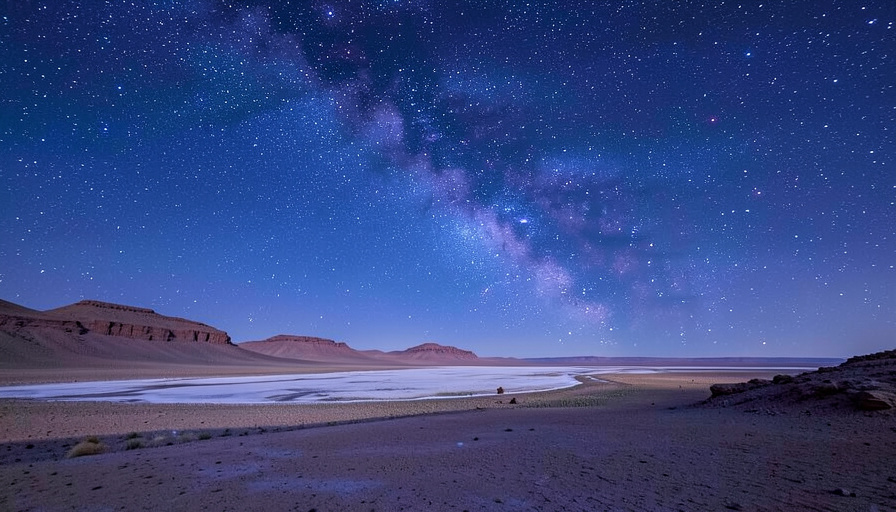
Most of us have never really seen the night sky. City light, humidity, and haze quietly erase it, leaving a handful of stars where there should be thousands. The Atacama Desert in northern Chile is the antidote, a place so dark, dry, and high that the sky it reveals can genuinely reset your sense of scale. That is why professional astronomy built its biggest telescopes here, and why travelers are increasingly following.
In Brief
Chile’s Atacama Desert is widely regarded as the best place on Earth for stargazing. At around 2,400 meters, with more than 300 clear nights a year, almost no humidity, and next to no light pollution, it shows a sky most people never see. It is home to world-class observatories like ALMA and ESO’s Paranal, and to a growing astrotourism scene of guided telescope tours. The best time to go is the dry winter, roughly June to August, for the clearest skies, timed around a new moon, though the shoulder months offer milder weather and still-excellent conditions.
Table of Contents
Why the Atacama Has the World’s Best Night Sky
The magic is really a stack of physics. The Atacama is the driest nonpolar desert on Earth, with humidity that can sit below one percent, so there is almost no water vapor to blur or dim the stars. Its high altitude puts you above much of the atmosphere’s turbulence, and its remoteness means near-zero light pollution, the darkest classification on the scale astronomers use.
Add more than 300 cloudless nights a year, and you get conditions that are close to perfect for looking up. It is no accident that some of the most powerful telescopes ever built sit here. The same qualities that make the Atacama ideal for cutting-edge science make it extraordinary for a traveler with nothing but their eyes.
The Observatories You Can Actually Visit
Part of the appeal is that world-class science is on the doorstep, and some of it is open to the public. ALMA, one of the most powerful observatories on Earth, sits on the high Chajnantor plateau and has historically offered free public visits to its base facility on weekends. ESO’s Paranal, home to the Very Large Telescope, runs guided tours, and the older La Silla site can be visited too, all detailed through the European Southern Observatory.
The catch is that these visits book up and require planning, often weeks ahead, and they run on limited days. They are worth the effort, but they are a supplement to a stargazing trip rather than the core of it, since the tours happen during the day.
When to Go, and How to Plan
Timing matters more than anything else. The dry winter, roughly June through August, brings the clearest and darkest skies, with the tradeoff of cold nights, and it is also when the bright core of the Milky Way rides high. The shoulder months, around March to April or September to October, offer more comfortable temperatures with still-excellent viewing. Whatever the season, plan your trip around the new moon, because a bright full moon washes out all but the brightest stars, guidance echoed in dedicated Atacama dark-sky guides.
Most travelers base themselves in San Pedro de Atacama, a small desert town that serves as the hub for tours. Guided stargazing experiences, typically two to three hours with telescopes and an expert leading a tour of the sky, generally run in the range of fifty to ninety dollars, and they are the easiest way to see the most on a first visit.
Practical Tips for a First Trip
A few details make the difference between a good night and a cold, disappointing one. Take altitude seriously, since San Pedro sits high and some sites are higher still, so acclimatize for a day or two, hydrate, and go easy at first. Bring genuinely warm layers, because desert nights get cold fast even after hot days. Book any observatory visits well in advance, choose a small-group tour if you want real time at a telescope, and if you plan to photograph the sky, bring a tripod and a red flashlight to protect everyone’s night vision.
Key Takeaways
- The Atacama’s dryness, altitude, and darkness make it arguably the best stargazing on Earth.
- It hosts major observatories, including ALMA and ESO’s Paranal, some open to public visits by advance booking.
- The dry winter (about June to August) offers the clearest skies; shoulder months trade some clarity for milder weather.
- Plan around the new moon, and base yourself in San Pedro de Atacama for tours.
- Prepare for altitude and cold, and book observatory visits and small-group tours early.
For more destinations and travel ideas, browse the DelightfulBlogs Travel section, or see related coverage on our News desk.
Frequently Asked Questions
Why is the Atacama so good for stargazing?
It combines extreme dryness, high altitude, and almost no light pollution, with more than 300 clear nights a year. That mix removes most of what normally hides the stars, which is why major telescopes are built there.
What is the best time to visit for stargazing?
The dry winter, roughly June to August, gives the clearest and darkest skies, though nights are cold. March to April and September to October offer milder weather with excellent viewing. Aim for around the new moon.
Can you visit the observatories?
Yes, some of them. ALMA has offered free public visits to its base facility on weekends, and ESO’s Paranal runs guided tours. Visits require advance booking, often weeks ahead, and run on limited days.
How much do stargazing tours cost?
Guided stargazing tours of two to three hours, with telescopes and an expert guide, generally cost in the range of fifty to ninety dollars per person, depending on the operator and group size.
Where do you stay for Atacama stargazing?
Most visitors base themselves in San Pedro de Atacama, a desert town that serves as the main hub for astronomy tours and desert excursions.
Final Word
The Atacama rewards a little planning with something rare: a sky so full it can be disorienting, the Milky Way bright enough to cast a mood over the whole desert. Pick the season, dodge the moon, respect the altitude, and let a good guide point the telescope. What you get in return is the version of the night sky our ancestors knew and most of us have lost, and standing under it, even briefly, tends to stay with people far longer than the trip itself.