
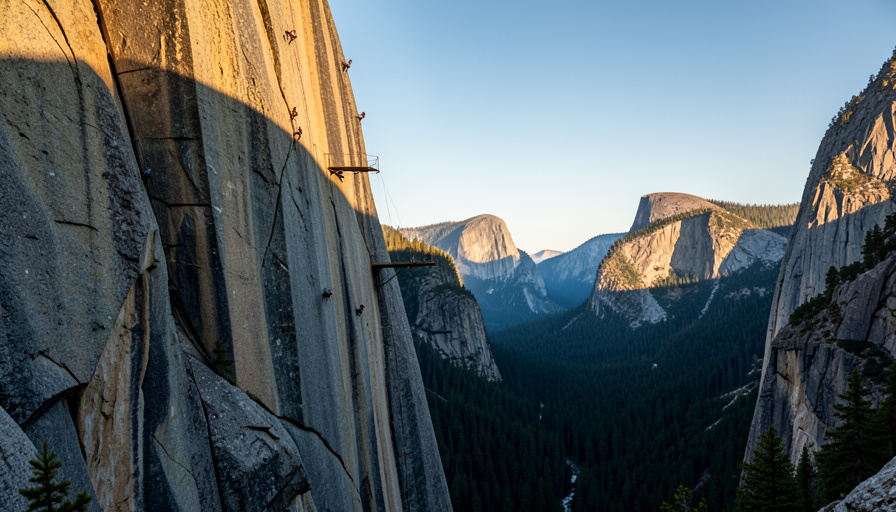
Yosemite Climbing Goes Viral: The Real Story on Crowds and Rescues
The clips that rack up millions of views leave out the crowds, the permits, and the rescue math. Here is what Yosemite’s granite actually asks of you.
A phone films a climber in Yosemite shuffling up a slick cable, or hanging off a fingerhold a thousand feet above the valley floor, and within a day it has more views than the park gets visitors in a season. The comments split fast. Half say “incredible.” Half say “that is how people die.” Both camps are looking at the same thirty seconds, and both are missing the part that matters, which is everything that happened before and after the camera rolled.
Yosemite has always drawn climbers. What changed is that the wall is now a stage, watched live by strangers, and the audience has questions the videos never answer. How crowded is that route, really? Who comes if it goes wrong? And is any of this safe for a normal, fit person who just watched a reel and booked a flight?
The Short Version
Yosemite climbing is as serious as it looks, but the real danger for most visitors has little to do with the vertical rock. Heat, wet granite, and going up a famous route with more confidence than skill send far more people home hurt. The park runs one of the best rescue teams in the country, and it still cannot undo a bad decision made 2,000 feet up. Plan around the boring risks and the dramatic ones mostly take care of themselves.
Table of Contents
What the viral clips leave out
A viral climbing video is a highlight, stripped of context on purpose. You see the crux move, not the four hours of hauling gear that came first, and not the years of training that made the move look casual.
The most sobering example is not a stunt. In October 2025, 23-year-old Balin Miller reached the top of Sea of Dreams, one of El Capitan’s hardest aid routes, then rappelled off the ends of his rope while going back down to free a stuck haul bag. He fell roughly 2,400 feet. A stranger happened to be livestreaming his ascent to about 500 viewers at the time, so his death was watched in real time by an audience that thought it was tuning in for an inspiring finish, as Climbing reported.
Miller was a gifted alpinist with real experience in Patagonia and Alaska. That is the point. He died from a rope-management error near the very end, the kind of quiet technical slip that never trends because it does not photograph well. Fitness and nerve had nothing to do with it. Honestly, the routes that go viral are rarely the ones that hurt people the way the mundane moments do.
The crowding is real, and it is getting managed
Climbing exploded in popularity over the past decade, and Yosemite’s most famous lines feel it. On a good weekend in spring, the popular free routes on El Capitan can look less like a wilderness pursuit and more like a queue, with parties stacked up waiting for the crux pitch and abandoned gallon water jugs left dangling on the wall. The Yosemite Climbing Association has spent years hauling that trash down.
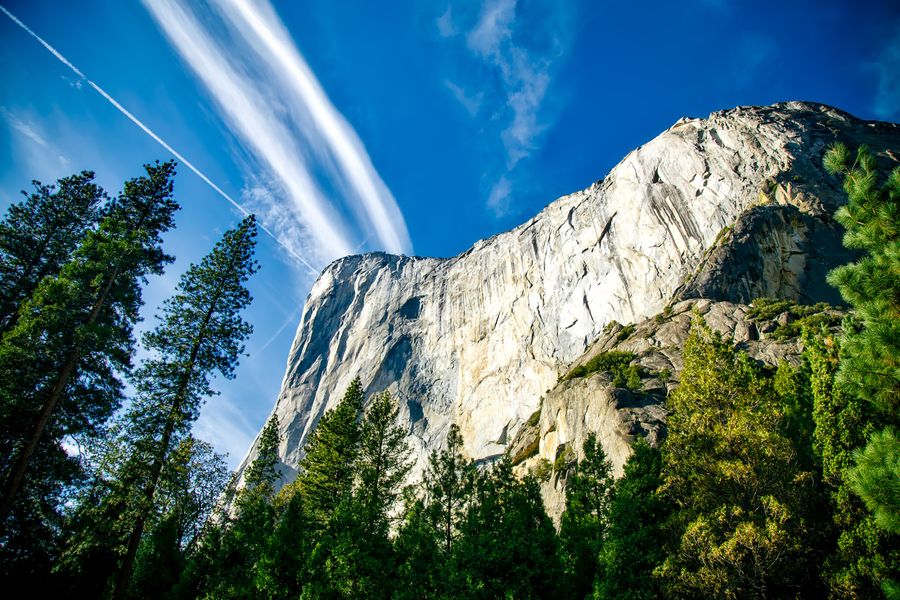
Half Dome is where the crowding turned into hard rules. The final stretch to the summit runs up two steel cables bolted to bare granite, and demand got so heavy that the park capped it. Now the cable route is limited to 300 people per day: 225 day hikers and 75 backpackers, handed out through a preseason lottery in late March plus smaller daily lotteries during summer, per the National Park Service.
Here is the detail the permit page makes plain and the videos never mention: the cables themselves are rarely the problem. Lightning and wet rock are. The summit sits near 8,800 feet, afternoon thunderstorms are routine in July and August, and slick granite turns a manageable scramble into a fall risk. The cables come up around late May and come down after the fall, roughly mid-October, weather permitting. Anything outside that window means climbing a route with the safety hardware removed.
How a Yosemite rescue actually works
When it does go wrong on a big wall, the response is genuinely world-class, and also genuinely limited by physics. Yosemite Search and Rescue, known as YOSAR, handles more big-wall rescues than any other team in the country and pulls off roughly five high-angle rescues on El Capitan in a typical year, most of them needing a helicopter, according to Climbing’s rundown on the team.
One rescue in October 2025 shows the scale of the effort. A climber about 2,300 feet up El Capitan shattered his arm and lost consciousness after a fall. Crews airlifted him off the vertical face using specialized gear and techniques the park spent decades developing, and high winds kept forcing the helicopter to break off and circle back before it could safely reach the wall. Jesse McGahey, who oversees YOSAR, called it the steepest helicopter rescue he had ever been part of, SFGate reported.
Wait, one thing worth flagging before you read that as reassurance. A rescue like that depends on daylight, flyable weather, and a team that is not already committed to another emergency. Get hurt at dusk in a storm with three other parties in trouble, and “world-class” starts to mean “as soon as we physically can.” The wall does not wait for the schedule to clear.
The bigger danger is not the big wall
Now here is where it gets interesting, and where the viral framing does the most damage. The dramatic footage trains people to fear the wrong thing. To be fair, elite climbing accidents really are rare. Ordinary trouble is not.
In 2024, YOSAR logged 191 search and rescue responses across the park. Ninety were major operations, 39 needed aircraft, and there were 16 fatalities, six of them from natural causes. Most of them had nothing to do with a rope or a crux move. The leading causes were slips and falls with lower-leg injuries, dehydration and exhaustion, lost or stranded hikers, and water incidents, as Active NorCal detailed from the park’s numbers.
| What people fear | What actually drives rescues |
|---|---|
| Falling off a sheer climbing route | Twisted ankles and lower-leg injuries on trails |
| Getting stuck on El Capitan | Dehydration and heat exhaustion on long day hikes |
| Elite gear failure | Getting lost, often after trusting a spotty navigation app |
| Dramatic weather on the summit | Wet granite and creek crossings underestimated by casual hikers |
Travelers underestimate terrain constantly, and not just in Yosemite. It is the same instinct that sends people toward a smoking volcano for a photo, the pattern we looked at in our coverage of Anak Krakatau and Sunda Strait travel risk. The scenery reads as a backdrop. It is actually the hazard.
A pre-trip checklist for Yosemite’s high routes
If a reel talked you into a big Yosemite objective, good. It is a spectacular place to test yourself. Just clear these before you commit, whether you are roping up on granite or hiking a cable route:
- Match the route to your real skill, not your best day. If you have never placed gear or used a via ferrata cable in the wet, El Capitan and the Half Dome cables in a storm are not where you learn.
- Lock the permit first. Half Dome’s cable route needs a day-use permit, capped at 300 people daily. No permit, no legal hike past the subdome. Enter the March lottery or grab a daily one two days out.
- Read the afternoon forecast, then move your turnaround time up. Summit before the thunderstorms build, usually early afternoon in midsummer. A dry cable at 9 a.m. and a wet one at 2 p.m. are different animals.
- Carry more water than feels reasonable and know where the next source is. Dehydration and heat put more people in YOSAR’s logbook than any rope failure.
- Do not outsource judgment to your phone. Download offline maps, but treat a navigation app as a backup to a paper map and a plan, not the plan itself.
- Tell someone your route and your hard turnaround. A rescue starts faster when the team knows where to look and when you were due back.
What To Know
- Viral clips show the crux, never the crowding, the permits, or the rope work that keeps a climber alive.
- Half Dome’s cable route is capped at 300 permits a day, and lightning plus wet granite, not the climb itself, are the real killers.
- YOSAR runs roughly five high-angle El Cap rescues a year and more big-wall rescues than any team in the country, but weather and daylight still set the limits.
- Most of Yosemite’s 191 rescues in 2024 came from heat, slips, and getting lost, not from elite climbing.
Frequently Asked Questions
Is rock climbing in Yosemite dangerous for beginners?
The famous routes are not beginner terrain, full stop. Yosemite has excellent guided instruction and easier crags for people learning, but El Capitan and the harder walls demand years of skill. Most serious accidents involve experienced people making a technical error, which tells you how little margin there is.
Do you need a permit to climb El Capitan or hike Half Dome?
You do not need a permit to rock climb El Capitan itself, though overnight big-wall parties should know the park’s regulations. Half Dome is different: its cable route requires a day-use permit, capped at 300 people per day and handed out by lottery. Hiking past the subdome without one is not allowed.
What is YOSAR, and does a rescue cost money?
YOSAR is Yosemite Search and Rescue, the park’s specialist team for technical and big-wall emergencies. The National Park Service generally does not bill you for the search and rescue itself, but any ambulance ride, medical helicopter transport, or hospital care afterward is your responsibility, and those bills can be large.
When can you climb the Half Dome cables?
The steel cables are typically installed around late May and removed in mid-October, though snow and weather shift those dates. Outside that window the hardware is down, which turns the final ascent into a far more serious and exposed climb.
Are the viral near-fall climbing videos staged?
Some are genuinely dangerous moments, and some show climbers who are safely roped in a way the camera angle hides. The real trouble starts with the viewer who assumes the route is casual and shows up without the skill, which is exactly how people end up needing a rescue.
The Bottom Line
A great climbing video is an invitation, and Yosemite is worth accepting it. Just take the invitation seriously enough to prepare for the version of the trip nobody films: the sore legs, the water math, the storm that rolls in an hour early. Respect the boring risks, get the permit, watch the sky, and the granite will give you the day you came for. For more trip planning that weighs the scenery against the real hazards, browse the DelightfulBlogs Travel section.