
Academy of Natural Sciences Draws Crowds and a Rally Before It Closes
Philadelphia’s oldest science museum is about to close, and the crowds finally arrived. Here is what is happening, when you can still visit, and what the fight to save it looks like.
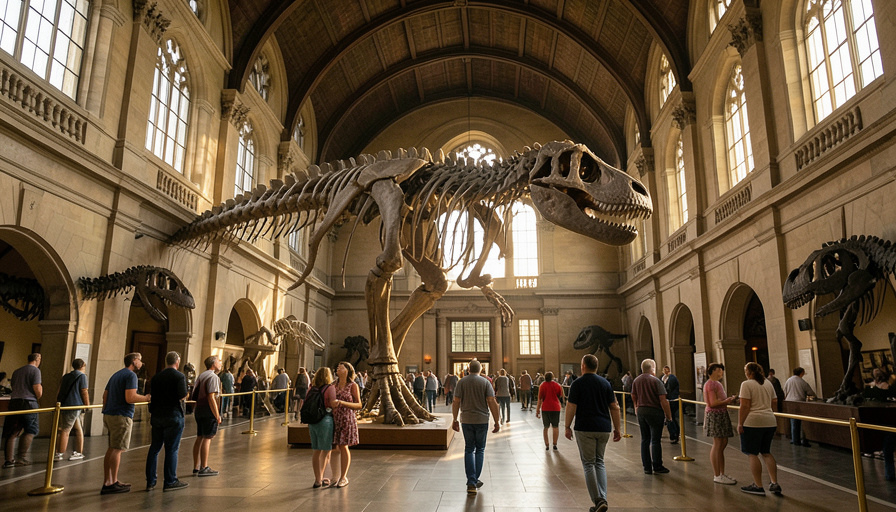
For years, you could wander the Academy of Natural Sciences almost alone on a weekday, past the dinosaur skeletons and the century-old dioramas. That is not the scene now. Since Drexel University announced on September 1 that the museum would close, the building on Logan Square has been packed, with families lining up for one last look before the doors shut for good on September 30, 2026.
In Brief
The Academy of Natural Sciences of Drexel University, founded in 1812 and the oldest natural sciences institution in the Western Hemisphere, is closing its public museum. The last regular-hours day is Sunday, September 27, and the doors shut for good after September 30. Drexel blames falling attendance since the pandemic and the rising cost of the historic building. The roughly 19 million specimens and the Academy’s research stay under Drexel’s care, but the public galleries are going away.
Why the crowds showed up now
The visitors are real, and so are their reasons. One Lansdale parent told a local news crew he grew up going to the Academy and wanted to bring his own kids “one last time before everything closes down.” A longtime member from Delaware County put it more plainly: “I feel like I’m saying bye to these dioramas that I’ve seen my whole life.” A Reddit post about the packed galleries crossed 11,000 upvotes within days.
Here is the harder part to say out loud. Regulars and former staff have been blunt about the surge online, and their point lands: the crowds now are mostly people who had not walked through the doors in years, and one former employee said the same galleries were near-empty three weeks earlier. That is the whole problem in a sentence. A museum stays open on steady Tuesday-afternoon attendance, not a farewell rush in its final month. The turnout is a genuine show of love, and also a preview of the business the numbers could not support.
Why Drexel is closing the museum
Drexel’s stated reasons are straightforward. Admission slid for years and never recovered after COVID, while the cost of operating a building that opened in 1876 kept climbing. In the university’s telling, staying put “would place increasing pressure on the resources required to safeguard the collections and sustain the research enterprise.” You can read Drexel’s own message on the collections and the museum’s future for the full framing.
The Academy has been tied to Drexel since a partnership signed in late 2011, when it was already under financial strain. Anyone who visited recently can point to the everyday version of the cost problem: a common complaint, even from people who love the place, was that the galleries ran uncomfortably hot in summer, a small sign of the aging systems that make a 150-year-old building expensive to keep open.
What closes on September 30, and what does not
“Closing” is doing a lot of work in the headlines, so it helps to separate the public museum from the institution behind it. Only one of these is going away.
| Part of the Academy | What happens |
|---|---|
| The public museum | Closes to visitors after September 30, 2026. The last regular-hours day is Sunday, September 27. The Logan Square building is expected to be vacated and eventually sold. |
| The collections | More than 19 million specimens stay with the Academy, and Drexel says it will keep stewarding them. |
| The research | Continues, including the Patrick Center for Environmental Research. The closure covers the galleries, not the science. |
| The staff | About 27 of roughly 80 employees are affected. |
| Leadership | President and CEO Scott Cooper is stepping down. Deputy Mayor Patricia Wellenbach is serving as interim leader, with David Cohen advising after a request from Gov. Josh Shapiro. |
That split is the real stakes. The scientifically important part, the specimens and the researchers who study them, is meant to survive. What Philadelphia loses is public access: the school field trips, the members who came monthly, and the chance to stand under a real dinosaur without a plane ticket.
The rally to keep it open
Not everyone treats the decision as final. On September 8, several hundred people gathered outside the building for a “Save the Academy” rally organized by science communicator Sarah McAnulty, chanting “Hey Drex! Save T-Rex” and carrying signs like “Save Our Saurs.” Local coverage of the protest at Logan Square captured both the anger and the confusion over how quietly the plan came together.
City Councilmember Nina Ahmad summed up the political frustration, asking why the closure caught the city off guard: “Why haven’t we heard about it? Why haven’t they come to us?” There is a thread of hope in the official response too. David Cohen, the state-appointed advisor, has floated the idea that a museum “could return later” in a smaller form, and the Academy could in theory disaffiliate from Drexel and find new partners. None of that is promised, and none of it moves the September 30 date.
If you want to visit before the doors close
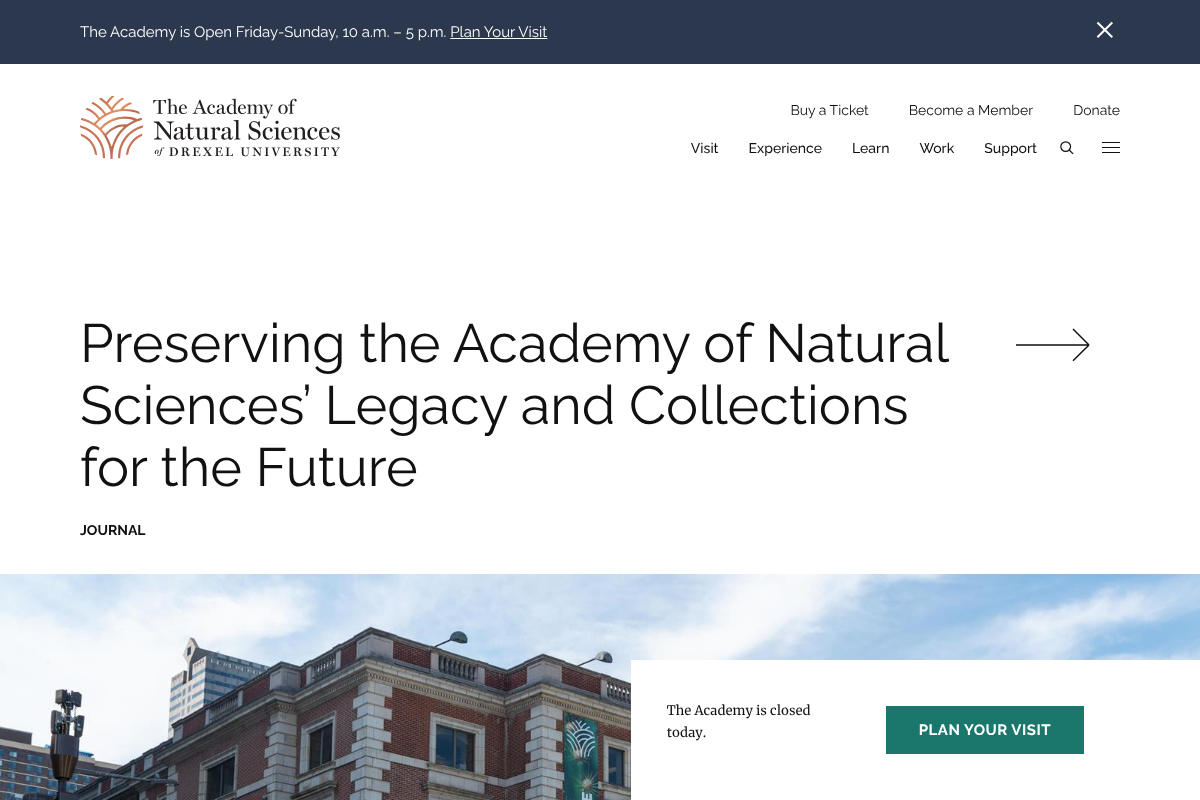
If seeing it one more time matters to you, the window is short and specific. As of September, the museum runs Friday through Sunday, 10 a.m. to 5 p.m., with Sunday, September 27 as the last regular-hours day.
- Expect crowds and go early. Staff have described “record numbers” handled by a skeleton crew, so waits are longer than usual.
- See Hadrosaurus foulkii. The Academy mounted this New Jersey fossil in 1868, the first dinosaur skeleton ever assembled for public display anywhere in the world.
- Give the dioramas time. The habitat scenes are the exhibit most longtime visitors say they came back to say goodbye to.
- Do not count on the butterfly garden. The live butterfly exhibit closed during COVID and never reopened.
Confirm current hours on the museum’s own visitor page before you go, since a small, stretched staff may adjust details in the final days.
At a Glance
- Last regular-hours day is Sunday, September 27, 2026; the museum closes for good after September 30.
- Drexel cites falling attendance since COVID and the cost of the 1876 building.
- The 19 million specimens and the research stay with the Academy; the galleries do not.
- The current crowds are mostly first-time-in-years visitors, the exact attendance gap that made the museum unsustainable.
For more coverage like this, browse the DelightfulBlogs Education section, or see trip ideas in our Travel section.
Frequently Asked Questions
When is the last day to visit the Academy of Natural Sciences?
The last day open with regular hours is Sunday, September 27, 2026, and the museum officially closes after September 30. In September the museum runs Friday through Sunday, 10 a.m. to 5 p.m.
Why is the Academy of Natural Sciences closing?
Drexel University points to a drop in visitors that never recovered after the pandemic, along with the rising cost of operating and maintaining the historic Logan Square building.
What happens to the dinosaurs and the 19 million specimens?
The collections stay with the Academy, and Drexel says it will keep caring for them. The research continues too. What is uncertain is when, or whether, any of it goes back on public display.
Is the entire Academy of Natural Sciences shutting down?
No. Only the public museum is closing. The research institution, including the Patrick Center for Environmental Research, keeps operating, and roughly a third of the staff is affected rather than all of it.
Could the museum reopen later?
Possibly, in a smaller form. A state-appointed advisor has raised that option, and the Academy could seek new partners, but nothing is confirmed and the September 30 closure still stands.
How can I support keeping it open?
Supporters have organized under the “Save the Academy” banner with rallies and petitions and urged people to contact city and state officials. Buying a ticket, becoming a member, or donating before the closure also helps the institution directly.
What This Means
The packed galleries of the last few weeks prove the Academy of Natural Sciences still means something to Philadelphia. They do not prove it can pay for itself, and that gap is the story. The specimens and the science are set to survive under Drexel, so the sharper question is whether any of this collection stays open to the public, and whether the smaller museum officials keep hinting at ever opens its doors. For now, the city’s best answer is a countdown to September 30 and a rally that refuses to accept it.