
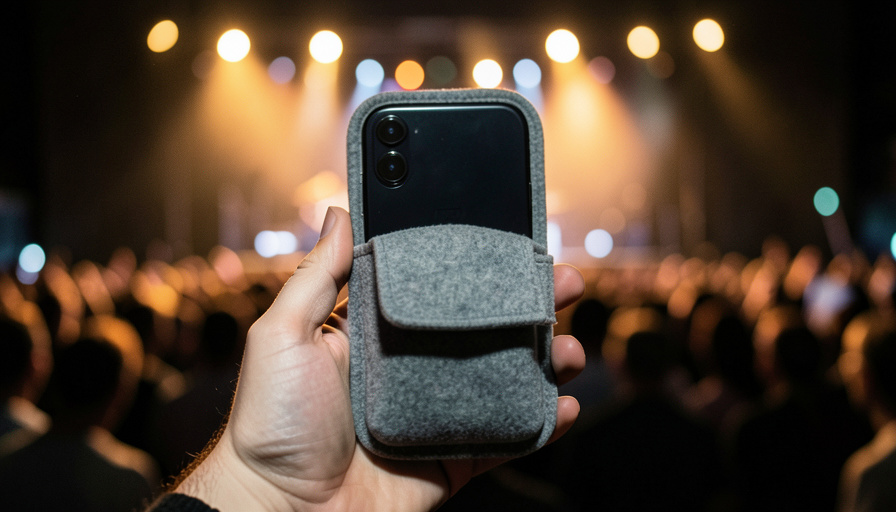
Why More Concerts Are Banning Phones in 2026
A great concert moment now reaches the internet before the encore. When Ye brought out Young Thug for “Lifestyle,” the clips were everywhere by morning. Against exactly that backdrop, a growing list of artists are doing the opposite and locking your phone in a pouch at the door.
The clip that spread from that Soldier Field set is a perfect example of the norm, and the default assumption at a big show is that thousands of screens will be up, filming, the whole night. That is precisely what a number of performers have decided they no longer want. Rather than fight a losing battle for attention against a sea of phones, they are removing the phones from the equation, and the tool that makes it practical has quietly become standard equipment on certain tours.
In Brief
More artists are running phone-free shows in 2026, using lockable Yondr pouches that let you keep your phone on you but sealed and unusable until you reach a designated unlocking station. Recent examples include Phoebe Bridgers, Dave Chappelle, and Gary Clark Jr., following Bob Dylan, who has toured this way for years. The reasons are consistent: deeper immersion, a stronger connection between performer and crowd, and a show that does not instantly end up online in fragments. The pushback is just as consistent, with some fans and even other musicians arguing that a good performance should hold attention without confiscating anyone’s phone.
How a phone-free show actually works
The system most tours use does not take your phone away, which is the detail that makes it workable. On arrival, staff seal your phone, and often smartwatches and other recording devices, inside a soft Yondr pouch that locks shut. You keep the pouch with you for the whole show. If you need your phone, you step to a designated phone-use area near the lobby, tap the pouch on an unlocking base, use it, then re-lock it to head back in. On the way out, everything unlocks. The point is not to separate you from your device in an emergency; it is to make casually filming the stage impossible during the performance.
Who is actually doing this
It has moved well past a novelty. Phoebe Bridgers asked for phone- and camera-free shows on her 2026 tour, with devices secured in pouches. Comedian Dave Chappelle’s 2026 arena dates require phones and smartwatches to be pouched, which is common in comedy, where a spoiled punchline has no replay value. Blues-rock guitarist Gary Clark Jr. has run phone-free dates in 2026 as well. And Bob Dylan has been doing this for years, banning phones across entire tours. The common thread is artists with a specific vision for the room, who would rather set the terms than compete with the glow of ten thousand screens.
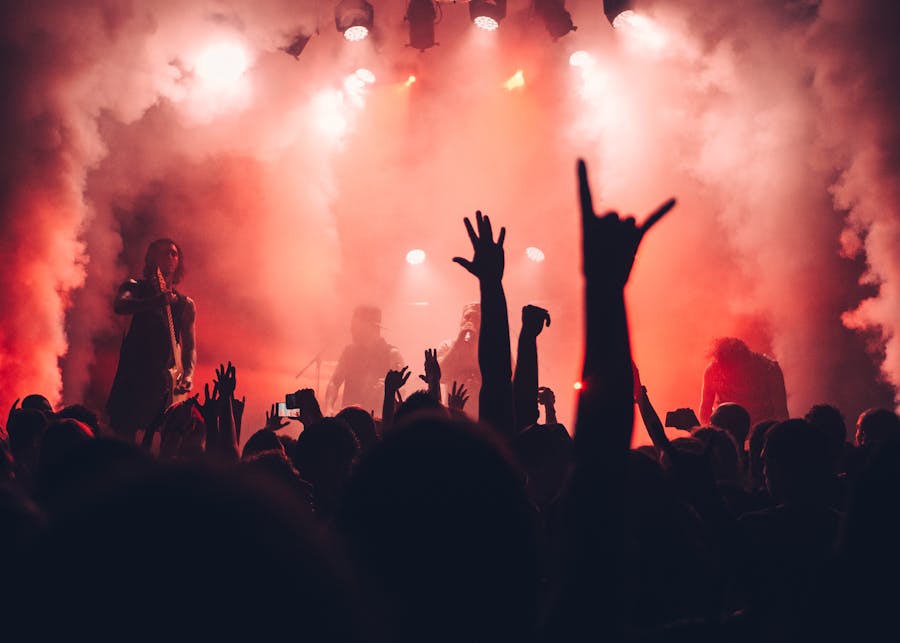
Why artists want the phones gone
The reasons come up again and again. The first is immersion: performers want a crowd that is present rather than watching the show through a four-inch rectangle. Tobias Forge of the band Ghost put the frustration bluntly, saying that if you have ten thousand people at a concert and eight thousand are holding phones, there is something deeply disconnected about it. The second is control over how the show reaches the world. A phone-free room makes it far harder for an entire song, a new joke, or an unannounced guest to be online in low-quality fragments before the night is even over. For an artist who has built a specific experience, both of those are worth the logistics of pouching an arena.
The case against banning phones
It is not a settled debate, and some of the strongest objections come from inside music. Blur’s Damon Albarn has argued that the answer to distracted crowds is better engagement rather than restriction, roughly that people will put their phones down on their own if you are connecting with them properly. Fans raise practical points too: a phone is how you check on a babysitter, coordinate with friends in a crowd, or capture one clip of a night you paid a lot to attend. And there is a fairness question about paying premium prices only to have a normal freedom removed at the door. The pouches answer some of this with phone-use areas, but not all of it, and the resentment is real.
Key Takeaways
- Phone-free concerts use lockable Yondr pouches that keep your phone on you but sealed until you reach an unlocking station.
- 2026 examples include Phoebe Bridgers, Dave Chappelle, and Gary Clark Jr., building on Bob Dylan’s long-running phone bans.
- Artists want it for deeper immersion, a stronger performer-audience connection, and to stop shows leaking online in fragments.
- Critics, including Damon Albarn, argue good engagement should hold attention without confiscating phones.
- Pouches allow phone use in designated areas, which addresses safety but not every fan objection.
For more music and culture coverage, browse the DelightfulBlogs Art & Entertainment section, or follow our News desk.
Frequently Asked Questions
How do phone-free concerts work?
Your phone, and often smartwatches, are sealed in a lockable Yondr pouch on entry. You keep the pouch through the show and can unlock it at designated phone-use areas if needed. Everything unlocks as you leave. You are never separated from your device, just prevented from filming during the performance.
Which artists ban phones at concerts?
In 2026, examples include Phoebe Bridgers, Dave Chappelle, and Gary Clark Jr. Bob Dylan has toured phone-free for years, and comedians widely use pouches. The list has grown from a novelty to a recognizable option that certain artists request.
Why do artists want phone-free shows?
Mainly for immersion and control. They want a crowd that is present rather than filming, and they want to prevent entire performances or surprises from ending up online in fragments during the show. Several performers describe phones as creating a disconnect with the audience.
What if there is an emergency during a phone-free show?
You keep your pouched phone with you the entire time and can reach a designated phone-use area to unlock it quickly. The system is designed to block casual filming, not to take your phone away or leave you unreachable in an emergency.
Do fans support phone bans at concerts?
Opinion is split. Supporters enjoy the more present, “had to be there” atmosphere, while critics say they want to capture a moment or stay reachable, and some musicians argue engagement should hold attention without a ban. The pouches address some concerns but not all.
Closing Thoughts
The phone-free show is a direct response to the world where a concert clip travels faster than the applause. Some artists have looked at that and decided the trade is worth it: give up the free promotion of a viral moment in exchange for a room full of people actually watching. Whether that feels like a gift or an imposition depends on why you came, to capture the night or to be in it. What is clear is that this stopped being a Dylan eccentricity and became a real choice more performers are making, and the little gray pouch at the door is now part of the show.