
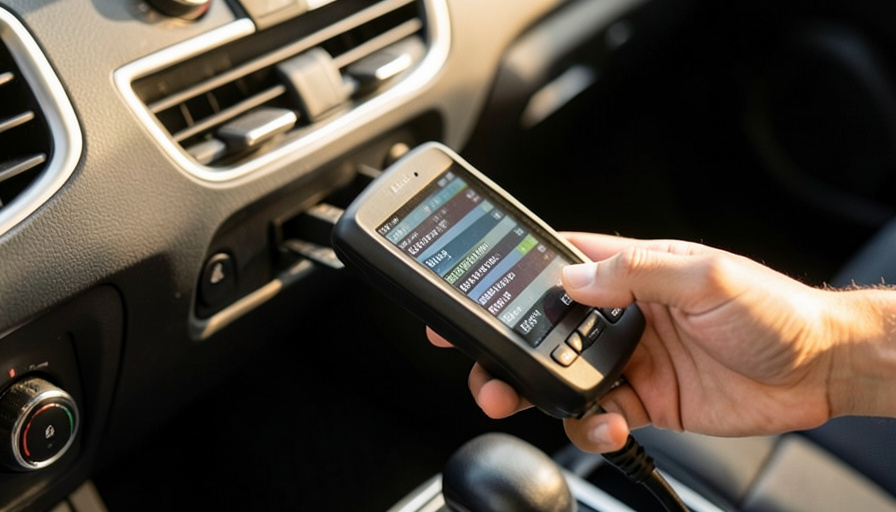
7 OBD2 Readiness Mistakes That Fail Emissions After a Battery Reset
You disconnected the battery to swap it out, or cleared a code with a cheap scanner, and now the check-engine light is finally off. So you drive straight to the smog station, feeling good, and the car fails anyway. The culprit is almost never the emissions system itself. It is the readiness monitors, which a battery reset wipes clean, and which a test station reads just as carefully as the tailpipe. Here are seven mistakes that fail an emissions test after a battery reset, and how to pass on the first try.
The fix for all of them is understanding one thing: your car has to prove to itself that its emissions systems work before it can prove it to an inspector. That proof gets erased when the battery loses power, and it only comes back after you drive the car a certain way. Get that sequence right and the test is easy. Skip it and you are handing over your fee for a guaranteed fail.
The Short Version
After a battery disconnect or a code clear, your OBD2 readiness monitors reset to “not ready,” and most emissions programs fail a car with too many incomplete monitors even when the check-engine light is off. The mistakes that cause a fail are driving straight to the test before completing a drive cycle, not knowing how many “not ready” monitors your state allows, clearing codes right before the test to hide the light, running the wrong or an incomplete drive cycle, blocking the EVAP monitor with a full or near-empty fuel tank, ignoring an underlying fault that stops a monitor from ever setting, and assuming every monitor sets in a single drive. Confirm all monitors read “ready” with a cheap scanner before you go back.
Why a battery reset resets your emissions readiness
Your engine computer runs a series of self-tests called readiness monitors, one each for systems like the catalytic converter, the EVAP system, the oxygen sensors, and the EGR. It stores the results in a memory that a small trickle of battery current keeps alive even when the car is off. Disconnect the battery, or clear the codes with a scan tool, and that memory is wiped, so every monitor flips to “not ready” until the car re-runs each self-test while you drive. Emissions programs check these monitors because a car with the warning light off but its monitors incomplete could be hiding a fault that has not tripped the light yet, so as the New York DMV explains, a vehicle that is “not ready” is failed or turned away until the monitors have run. That is why the light being off is not the same as being ready to pass.
This is general automotive information, not a repair manual for your specific car. Emissions rules, the number of incomplete monitors allowed, and the exact drive cycle vary by state, region, and vehicle. Check your local emissions program and your owner’s manual, and if a monitor will not set after repeated proper drive cycles, have a mechanic diagnose the underlying fault.
The 7 mistakes that fail an emissions test
- Driving straight to the test after a battery disconnect. This is the big one. The moment power is lost, the monitors reset to “not ready,” and the station reads that as an incomplete, unverifiable car. You have to drive a full drive cycle first so the monitors run and set to “ready” before you go anywhere near the test lane.
- Not knowing how many “not ready” monitors your state allows. Most programs let a newer OBD2 vehicle pass with one incomplete monitor, and older vehicles with two, but the exact rule varies by state. Assuming zero are allowed makes you chase a monitor you did not need to, and assuming any number passes gets you failed. Look up your local threshold.
- Clearing codes right before the test to hide the light. Wiping a code also wipes readiness, so you arrive with a fresh set of “not ready” monitors and often the light returns anyway once the fault repeats. Inspectors check both whether the light is commanded on and whether the monitors are complete, so this trick reliably backfires.
- Running the wrong or an incomplete drive cycle. Monitors only run under specific conditions, such as a cold start, a stretch of steady highway speed, some idling, and a period of deceleration. Short hops around town may never complete the catalyst or EVAP monitor, as the standard drive-cycle guidance spells out. Follow your manufacturer’s specific drive cycle instead of driving around at random.
- Blocking the EVAP monitor with the wrong fuel level. The EVAP monitor, which checks the fuel-vapor system, generally only runs when the tank is roughly a quarter to three-quarters full. Fill it to the brim or run it near empty and that monitor may never complete, no matter how far you drive, leaving you one stubborn “not ready” short of passing.
- Ignoring an underlying fault that stops a monitor from setting. If a monitor refuses to complete after several proper drive cycles, that is a symptom, not bad luck. A small EVAP leak, a lazy oxygen sensor, or a marginal catalytic converter can quietly block a monitor from finishing its self-test. Scan for pending codes and fix the real problem before you keep driving in circles.
- Assuming every monitor sets in one drive. Some monitors, especially the catalyst and EVAP ones, need several drive cycles and the right ambient conditions to finish. Rushing back to the station after one trip wastes another visit. Read the monitor status with an inexpensive OBD2 scanner and confirm everything shows “ready” before you retest.

How to pass on the first try after a reset
A little patience beats a repeat trip. After any battery disconnect or code clear, first make sure there are no pending faults, since a real problem will stop a monitor from ever setting. Then top the fuel tank to somewhere between a quarter and three-quarters so the EVAP monitor can run. Look up your vehicle’s specific drive cycle in the owner’s manual or a reliable source, and follow it, which usually means a cold start after the car has sat overnight, a mix of steady highway cruising and city driving, and some idling, spread over a few days of normal use rather than one frantic loop. Before you go back to the station, plug in a cheap OBD2 reader and check that the monitors read “ready,” allowing for the one incomplete monitor most states permit. Do that, and the test becomes the formality it should be, instead of a coin flip you paid for.
Main Takeaways
- A battery disconnect or code clear wipes your readiness monitors to “not ready,” and the light being off does not mean the car will pass.
- Complete your vehicle’s specific drive cycle before testing so the monitors run and set to “ready.”
- Know how many incomplete monitors your state allows, usually one for newer OBD2 cars, and do not clear codes right before the test.
- Keep the fuel tank between about a quarter and three-quarters full so the EVAP monitor can run.
- If a monitor will not set after proper drive cycles, fix the underlying fault, and always confirm “ready” with a scanner before you retest.
For more car-care and inspection guides, browse the DelightfulBlogs Automotive section, or see our guide to OBD2 scanner app alternatives for reading and clearing codes.
Frequently Asked Questions
How long after a battery disconnect can I pass an emissions test?
It depends on the car, but plan on several days of varied driving rather than a single trip. The monitors reset to “not ready” when power is lost and only set again after your vehicle completes its specific drive cycle, which mixes cold starts, highway speed, and idling. Check the monitor status with an OBD2 scanner, and only return to the station once it reads “ready.”
Why does my car fail emissions if the check-engine light is off?
Because the test checks readiness monitors as well as the light. After a battery reset the monitors show “not ready,” and most programs fail or reject a car with too many incomplete monitors, since it cannot yet prove its emissions systems are working. The light being off only means no active fault, not that the self-tests have finished running.
What is a drive cycle, and how do I do one?
A drive cycle is a specific sequence of driving conditions that lets each monitor run its self-test, typically a cold start after the car has sat, a period of steady highway speed, some city driving, idling, and gentle deceleration. The exact recipe varies by manufacturer, so check your owner’s manual. Driving this way over a few days usually sets all the monitors.
Does clearing codes before a smog check help me pass?
No, it usually causes a fail. Clearing codes also erases readiness, so you arrive with “not ready” monitors, and if the fault is still present the light often returns. Inspectors look at both the light and the monitors, so the smarter move is to fix the problem, complete a drive cycle, and confirm the monitors are ready before testing.
Why won’t my EVAP monitor set to ready?
Two common reasons. The fuel level may be wrong, since the EVAP monitor generally only runs with the tank between about a quarter and three-quarters full, so top it up if it is full or nearly empty. Or there may be a small vapor leak, such as a loose or failing gas cap, that quietly blocks the monitor. If the level is right and it still will not set, have the EVAP system checked.
The Bottom Line
Failing an emissions test right after a battery change feels unfair, but the car is doing exactly what it is designed to do: refusing to vouch for systems it has not re-tested yet. Give it the chance to. Fix any real fault first, set the fuel level so the EVAP monitor can run, follow your vehicle’s drive cycle over a few days, and verify “ready” with a scanner before you go back. The station is not looking for a dark warning light so much as a car that can prove itself, and a few days of the right driving is all it takes to let yours do that.