
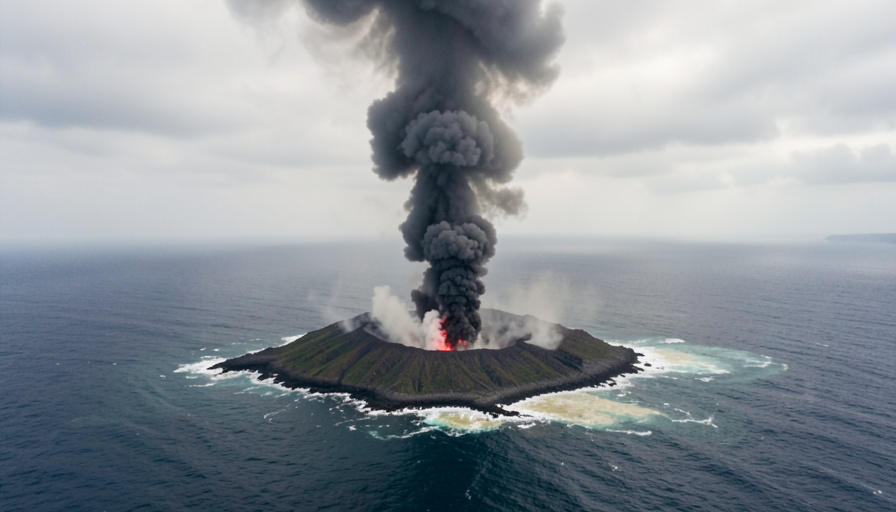
Anak Krakatau Under Close Watch After Sea-Surface Boiling
Clips of the sea appearing to boil around Anak Krakatau spread fast. Here is what the volcano is actually doing, and what the people watching it are looking for.
A volcano sitting in the middle of a busy shipping strait, an ash column punching toward the edge of the stratosphere, and video of the ocean apparently boiling around the crater. Anak Krakatau has handed the internet plenty to react to this month. The footage is real. The interpretations are where it gets messy, so it helps to separate what the volcano is doing from what a phone camera makes it look like.
Bottom Line First
Anak Krakatau, in Indonesia’s Sunda Strait, has sat at alert Level III, the second-highest of four, since early July 2026. It produced a major eruption on September 4 and 5 that pushed ash roughly 15 kilometers into the sky, then settled into smaller, frequent bursts and erupted again on September 8. The “boiling sea” in the clips is hot volcanic material meeting seawater near the shoreline, a sign of vigorous shallow activity. Authorities are holding a 3-kilometer exclusion zone and watching for any hint of the collapse-and-tsunami pattern that struck the region in 2018.
Table of Contents
What’s Actually Happening at Anak Krakatau
The current unrest is not a single event. Indonesia’s volcanology agency raised Anak Krakatau to Level III (Siaga) on July 2, and it has stayed there. The standout moment came late on September 4, when the volcano began an eruption that ran for about 25 hours and threw ash to roughly 15 kilometers, high enough to matter for aircraft across the region, as documented by volcano monitors.
After that peak, activity dropped back to smaller Strombolian bursts, the sputtering, fountaining style the volcano is known for, and it erupted again on September 8. The alert level has held steady through all of it. Before-and-after images suggest the island itself has grown to the southwest, which is exactly what a volcano that keeps piling up erupted material tends to do.
Is the Sea Really Boiling?
This is the question everyone is actually asking, and the short answer is yes, sort of. When very hot volcanic material, lava, or superheated gas reaches seawater at the shoreline or through shallow vents, the water genuinely heats, steams, and churns. It can also change color as gases and minerals mix in. So the “boiling” is not a camera trick, though the drama of a clip can outrun the scale of what is happening.
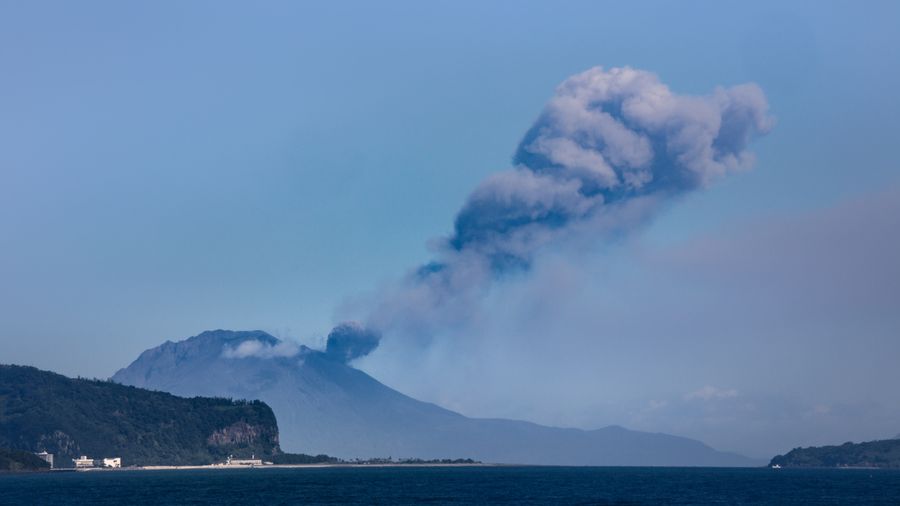
Here is the part worth keeping in mind. Steaming water is a symptom of shallow, energetic activity, and that is why observers pay attention to it. It does not, on its own, predict a bigger eruption. It is one reading among many that monitors fold into a fuller picture.
What the Monitoring Is Watching For
Indonesia tracks Anak Krakatau through its Geological Agency and the public Magma Indonesia system, which logs eruptions, seismic signals, and visual observations in near real time. The team watches earthquake patterns under the volcano, the height and frequency of ash bursts, ground deformation, and gas output.
One concern hangs over all of it. In December 2018, part of Anak Krakatau’s flank slid into the sea and triggered a tsunami that killed more than 400 people along the Sunda Strait coast. Nobody is forecasting a repeat, and the volcano is smaller and differently shaped now. But it is the reason monitors treat any sign of slope instability with unusual seriousness, and why the exclusion zone exists.
If You Are Near the Sunda Strait
- Respect the exclusion zone. Stay at least 3 kilometers from the crater. That means no sightseeing boats or drone runs up to the island.
- Follow official channels. Indonesia’s disaster agency (BNPB) and the Magma Indonesia updates are the authoritative sources, not viral clips.
- Prepare for ashfall. If ash reaches inhabited areas, wear a mask, cover water containers, and keep car engines off in heavy fall.
- Know the coastal risk. If you are on the shoreline and feel strong or long shaking, move to higher ground without waiting for an official alert.
At a Glance
- Anak Krakatau has been at alert Level III since July 2, 2026.
- A major eruption on September 4 and 5 sent ash to about 15 kilometers; it erupted again on September 8.
- The “boiling sea” is hot volcanic material heating seawater near the shore, a real but not alarming sign on its own.
- A 3-kilometer exclusion zone is in place, with monitors watching for slope instability.
- The 2018 flank-collapse tsunami is why any instability is taken so seriously.
For more coverage of natural hazards and safety, follow the DelightfulBlogs News desk, or see our Travel section for regional travel context.
Frequently Asked Questions
Is the seawater near Anak Krakatau really boiling?
Yes, in effect. Hot volcanic material and gas reaching the sea heats and steams the water near the shoreline, which can look like boiling. It signals shallow, energetic activity but does not by itself predict a larger eruption.
What alert level is Anak Krakatau at now?
It has been at Level III (Siaga), the second-highest on Indonesia’s four-step scale, since July 2, 2026. Authorities maintain a 3-kilometer exclusion zone around the crater.
Where is Anak Krakatau?
It sits in the Sunda Strait, the stretch of water between the Indonesian islands of Java and Sumatra. It is the young cone that grew from the site of the 1883 Krakatau eruption.
Could this eruption cause a tsunami?
No one is forecasting one, but it is the scenario monitors watch most carefully. A 2018 flank collapse triggered a deadly Sunda Strait tsunami, so any sign of slope instability is treated with extra caution.
What should people nearby do?
Stay outside the exclusion zone, follow Indonesia’s disaster agency and the Magma Indonesia updates, prepare for ashfall, and move to higher ground immediately if strong or prolonged shaking is felt near the coast.
Practical Takeaway
Anak Krakatau is doing what a young, restless volcano in the sea does: erupting in bursts, reshaping its own island, and turning the water around it to steam. The images are striking, and the alert level is real, but the useful posture is neither panic nor a shrug. Watch the official updates rather than the clips, keep clear of the exclusion zone, and remember that the quiet metric monitors care about most is not how the sea looks today. It is whether the ground under the volcano stays put.