
11 Passport Photo Mistakes That Get You Rejected
A rejected passport photo costs you more than a reprint. It can send your whole application back and add weeks to a timeline you were counting on. The good news is that almost every rejection comes from the same short list of fixable mistakes, and one of them is brand new for 2026.
Passport photo rules feel oddly strict until you realize the machines and reviewers checking them have zero tolerance for ambiguity. The rules below are for US passports, and while other countries share most of them, you should confirm your own country’s specifics before you apply. Catch these eleven issues at home and you spare yourself the single most avoidable delay in the whole process.
Quick Answer
The most common reasons a US passport photo gets rejected are incorrect head size, wearing glasses, a non-neutral expression, and a background that is not plain white or off-white. New for 2026, any photo showing signs of AI editing, filters, or digital alteration is automatically rejected before a human even looks at it. Round out the list with shadows, photos older than six months, hats or head coverings, wrong size, selfies or blurry images, and uniforms. Nearly all of these are things you can see and fix yourself before you submit, which is exactly why it is worth a two-minute check.
The 11 reasons photos get rejected
- Your head is the wrong size. This is the single most common rejection. The height from the bottom of your chin to the top of your head must be between 1 and 1⅜ inches in a 2-inch photo, so a head that is too big or too small fails even when everything else is perfect.
- You are wearing glasses. Eyeglasses have been banned in US passport photos since 2016. The only exception is a documented medical reason, which requires a signed statement from a medical professional. Take them off.
- The photo shows AI editing or filters. As of January 1, 2026, any photo with signs of AI editing, beautification, or digital alteration is automatically rejected before a human reviewer sees it. Use a naturally captured photo with no enhancements.
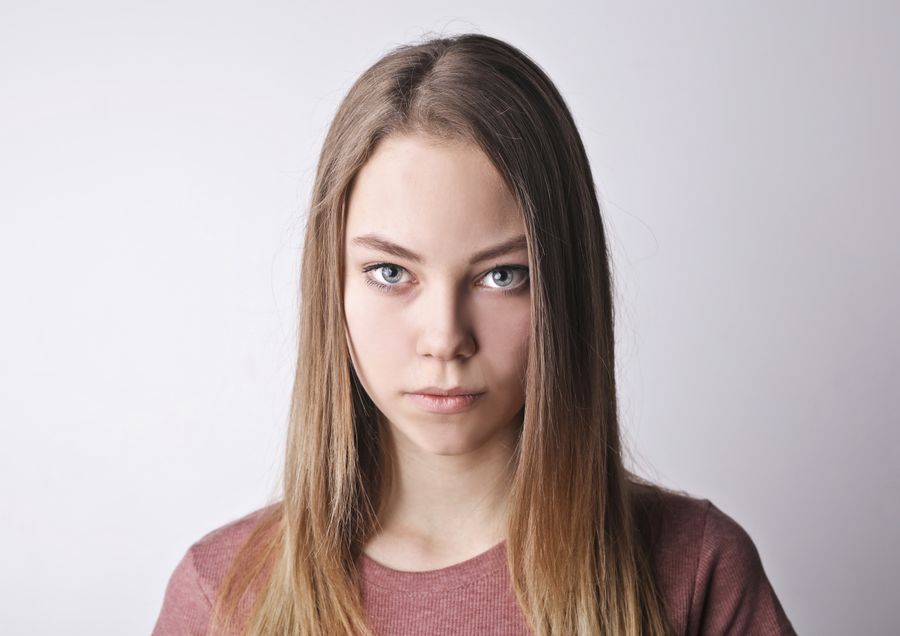
- Your expression is not neutral. A big smile, a frown, or an open mouth can get you rejected. Aim for a neutral expression or a natural, closed-mouth look, with both eyes open and looking at the camera.
- The background is not plain. It must be plain white or off-white with nothing else in it, no patterns, no objects, no other people. A colored wall or a busy background is an automatic fail.
- There are shadows or uneven lighting. Shadows on your face or behind you, a color cast, or uneven light will get the photo bounced. Use soft, even, front-facing light so your face and the background are consistent.
- The photo is too old. Your photo must have been taken within the last six months and look like you do now. An older shot, even a good one, does not qualify.
- You are wearing a hat or head covering. Hats and head coverings are not allowed, except for religious or medical reasons, and those require documentation. Otherwise your head must be bare.
- The size or crop is wrong. The photo must be 2 by 2 inches with your head centered and facing the camera squarely. An off-center crop or the wrong dimensions will not pass, even if the shot itself is fine.
- It is a selfie or a blurry image. Selfies taken at arm’s length distort your face and are rejected, and any photo that is blurry, pixelated, or low resolution fails. Have someone else take it, in sharp focus.
- You are wearing a uniform or headphones. Uniforms and camouflage are not allowed, so wear everyday clothing, and remove headphones, wireless earbuds, and any other devices before the shot.
How to get it right the first time
A few habits prevent nearly all of these. Stand a couple of feet in front of a plain white wall with even light and no shadow behind you, take off your glasses and any hat, and keep a neutral expression with both eyes open. Have someone else take the photo straight on rather than shooting a selfie, and skip every filter and editing tool, since a natural capture is now required. Before you submit, use an official photo tool or a checklist to confirm the head size and dimensions, because that measurement is the one people get wrong most. When in doubt, a pharmacy or photo shop that does passport photos will get the size and background right for a small fee.
What To Know
- Incorrect head size is the most common rejection, so check that chin-to-crown measurement carefully.
- Glasses have been banned since 2016, and as of 2026 any AI-edited or filtered photo is automatically rejected.
- Use a plain white or off-white background with no shadows, and keep a neutral expression with both eyes open.
- The photo must be 2 by 2 inches, taken in the last six months, with no hats, uniforms, or headphones.
- Avoid selfies and filters; have someone take a sharp, natural photo and verify the size before submitting.
For more travel-document tips, browse the DelightfulBlogs Travel section, or follow our News desk.
Frequently Asked Questions
Can I wear glasses in a passport photo?
No. Eyeglasses have been banned in US passport photos since 2016. The only exception is for a documented medical reason, which requires a signed statement from a medical professional. For a normal application, remove your glasses before the photo.
Are AI-edited or filtered passport photos allowed?
No. As of January 1, 2026, any US passport photo showing signs of AI editing, filtering, or digital alteration is automatically rejected before a human reviewer sees it. Submit a naturally captured photo with no enhancements or beautification.
What is the most common reason passport photos get rejected?
Incorrect head size. The distance from the bottom of the chin to the top of the head must be between 1 and 1⅜ inches in the 2-inch photo. A head that is too large or too small is the top cause of rejection, so verify that measurement before submitting.
Can I smile in a passport photo?
Keep it minimal. A neutral expression or a natural, closed-mouth look is safest, with both eyes open and facing the camera. A broad smile, a frown, or an open mouth risks rejection, so err toward a relaxed, neutral face.
Can I take a passport photo as a selfie?
No. Selfies taken at arm’s length distort your features and are rejected. Have someone else take the photo straight on from a couple of feet away, in sharp focus, against a plain white background with even lighting.
Final Word
A passport photo is one of the few parts of the whole application you fully control, which makes a rejection especially frustrating and especially avoidable. Run through the list before you submit: right head size, no glasses, neutral face, plain background, no filters, recent, and correctly sized. Two minutes of checking beats weeks of waiting for a redo, and it keeps the only real countdown, your travel date, exactly where you want it.