
The US Data Center Boom Enters the Gigawatt Era
For years, a big data center meant 100 megawatts. In 2026 the yardstick jumped to the gigawatt, and the US power grid is starting to feel it.
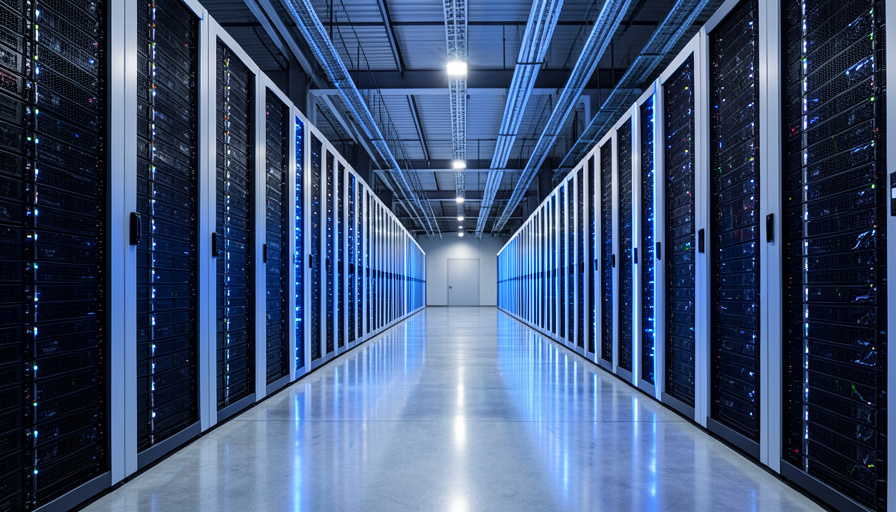
A data center used to be a quiet building full of servers. The new ones are closer to small cities in how much electricity they pull. In 2026 the US crossed a threshold that would have sounded absurd a few years ago: single campuses drawing a full gigawatt, roughly the output of a large nuclear plant, all to train and run AI.
Quick Answer
The US data center boom has entered a phase measured in gigawatts rather than megawatts. Around 2,100 US data centers already use about 4.4% of the country’s electricity, and more than 620 are under construction or planned across 47 states. Grid-power demand from these sites is projected to climb from about 61.8 gigawatts in 2025 to 75.8 in 2026, and five campuses at one gigawatt or more, each run by a different hyperscaler, are expected online this year. AI is why the numbers keep jumping.
Table of Contents
How Big the Boom Actually Is
Start with the base. The US already runs about 2,100 data centers, and together they consume roughly 176 terawatt-hours a year, close to 4.4% of all the electricity the country uses, according to industry statistics compiled for 2026. That is before the current wave lands. More than 620 additional facilities are under construction or planned across 47 states.
The largest sites are the story. By some industry counts, roughly 90 US sites now draw more than 100 megawatts each, and that tier is where the growth is concentrated. Grid-power demand from data centers is forecast to rise from about 61.8 gigawatts in 2025 to 75.8 gigawatts in 2026, a jump that would be unremarkable for a whole state and startling for one industry.
From Megawatts to Gigawatts
The mental model has to change. For a long time, 100 megawatts marked a serious hyperscale facility. In 2026, five campuses at a full gigawatt or more are expected to come online, each operated by a different hyperscaler, as Quartz reported. A gigawatt is the output of a large nuclear reactor, dedicated to a single computing campus.
Developers are not even treating 100 megawatts as a ceiling anymore. Many new projects start at 100 to 300 megawatts but are engineered from day one to expand toward gigawatt scale, so the site you read about at launch is often a fraction of what it is built to become.
Why AI Changed the Math
None of this happened because people started streaming more video. It happened because AI is unusually power-hungry. Training a large model means running tens of thousands of specialized chips flat out for weeks, and serving that model to millions of users afterward keeps the draw high. A rack of AI accelerators can pull several times the power of a traditional server rack in the same space.
That density is what pushed the industry from megawatts to gigawatts in a handful of years. The demand curve is not following the old cloud growth pattern. It is steeper, and it is tied directly to how fast AI capability keeps expanding.
What This Puts Under Strain
Growth this fast lands on infrastructure that was not built for it. The obvious pressure point is the electrical grid, which has to find, generate, and deliver all those gigawatts. Behind that sit slower problems: securing generation, winning permits, and competing with towns and factories for the same power. Projections that the sector could add more than 20 gigawatts of new capacity over the next several years, per data-center industry tracking, only sharpen the question of where it all comes from.
Main Takeaways
- US data centers already use about 4.4% of the country’s electricity, and 620-plus more are planned across 47 states.
- Data-center grid demand is forecast to rise from about 61.8 GW in 2025 to 75.8 GW in 2026.
- Five gigawatt-scale campuses are expected online in 2026, each equal to a large nuclear plant’s output.
- New projects starting at 100 to 300 MW are engineered to expand toward gigawatt scale.
- AI’s power density, not ordinary cloud growth, is driving the surge.
For more on technology and infrastructure, browse the DelightfulBlogs Tech section, or read related coverage in our Business section.
Frequently Asked Questions
How much electricity do US data centers use?
About 2,100 US data centers consume roughly 176 terawatt-hours a year, close to 4.4% of total US electricity, and their share is rising quickly as new AI facilities come online.
What is a gigawatt-scale data center?
It is a single campus that draws about one gigawatt of power, roughly the output of a large nuclear reactor. Five such facilities, each run by a different hyperscaler, are expected to come online in the US in 2026.
Why is AI driving the data center boom?
Training and running large AI models require huge clusters of specialized chips that draw far more power per rack than traditional servers. That density has pushed facility sizes from megawatts toward gigawatts.
How many new data centers are being built?
More than 620 US data centers are under construction or planned across 47 states, and the sector could add over 20 gigawatts of new capacity in the next several years.
Where are these data centers located?
They are spread across 47 states, with clusters near cheap power, water, and network capacity. New gigawatt-scale campuses are increasingly sited around available electricity rather than traditional tech hubs.
Final Word
The data center boom stopped being a niche infrastructure story the moment single buildings started rivaling power plants. The megawatt era measured a growing industry. The gigawatt era measures one colliding with the physical limits of the grid. How the US builds and powers these campuses over the next few years will shape electricity bills, local politics, and the pace of AI itself, which is a lot riding on buildings most people will never see.