
Anak Krakatau’s Alert Drops to Level II: What Changes at Sea
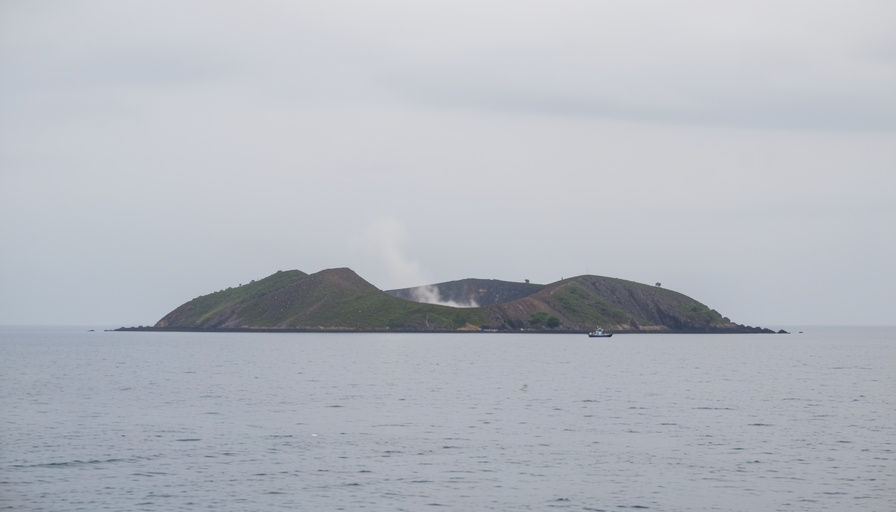
Indonesia has eased Anak Krakatau’s alert level for the first time since July, and fresh images of the steaming island are circulating with it. The headline sounds like relief. The rule that actually governs the water around the volcano has not moved at all.
When a volcano’s official alert level drops, it is tempting to read it as an all-clear. Anak Krakatau’s downgrade this week is a real, measured improvement, based on weeks of falling activity. But the monitoring agency has kept a hard line drawn around the island, on land and across the sea lane it sits in, and that gap between “calmer” and “safe to approach” is the part worth understanding.
At a Glance
Indonesia’s volcanology agency, PVMBG, lowered Anak Krakatau from Level III to Level II on September 21, 2026, after data showed activity and ground deformation easing off. The 3-kilometer exclusion zone stays in force, and it applies on the water as much as on land, so port and shipping authorities are still keeping vessels out of that radius in the Sunda Strait. The lower level reflects a calmer volcano, not an open island. Monitoring continues around the clock through PVMBG and the MAGMA Indonesia system, and residents and sailors are asked to follow official channels rather than viral clips.
What actually changed on September 21
The concrete change is one notch on a four-level scale. PVMBG moved Anak Krakatau from Level III down to Level II, effective the evening of September 21. The agency based the decision on a comprehensive review showing that seismic activity had declined and that deformation data pointed to deflation, meaning the ground around the volcano was settling rather than swelling with fresh magma. In plain terms, the instruments say the island is doing less than it was through early September, when it ran through a punishing eruptive stretch.
That stretch is why the downgrade matters. The volcano had been at Level III since July 2, and between September 4 and 6 it erupted more or less continuously for about 25 hours, sending ash well above 15 kilometers and disrupting nearly 3,000 flights across the region. Coming down from that to Level II is a genuine sign the crisis phase has passed for now.
The part that did not change: the sea zone
Here is the detail most of the celebratory posts skip. The 3-kilometer exclusion zone around the crater is still in place, and it covers the water as much as the land. It is a maritime restriction that happens to also close a hiking route. Residents, tourists, and climbers are barred from the area, and so are boats and ships, which means the authorities that manage traffic in the Sunda Strait are keeping vessels outside that radius. Anak Krakatau does not sit off in isolation; it rises in the middle of one of Indonesia’s busiest waterways, the strait that separates Java from Sumatra and carries constant ferry and cargo movement. Drawing an off-limits circle in the sea there is a live, ongoing instruction, not a formality.
Why a lower alert still comes with restrictions
The reason is that a Level II volcano is a monitored one, not a dormant one. The alert scale describes trend and risk, and Level II still signals notable activity that could pick back up. Volcanoes like Anak Krakatau can shift quickly, which is exactly why the exclusion zone survives a downgrade: it is a buffer against sudden explosions, falling debris, and the waves that a collapse or blast can throw across nearby water. Keeping ships a few kilometers out costs little and removes the scenario where a vessel is caught close in if the volcano flares again without much warning.
How Indonesia is actually watching it
Behind the alert number is a continuous monitoring operation. PVMBG tracks seismic signals, ash emissions, and deformation, and pushes updates through the MAGMA Indonesia platform, which is the official public source for the volcano’s status. Indonesia also runs a multi-sensor tsunami early-warning system through its meteorology agency, BMKG, which reported no sea-level anomaly during the September eruption. That combination, ground instruments plus sea-level sensors, is what lets officials lower an alert with some confidence while still holding the exclusion line. If you want the real status on any given day, that official feed is the answer, and we covered how to tell genuine footage from recycled clips when the scary videos start spreading.
What it means if you are in the region
For most people the practical picture is straightforward. If you live along the Sunda Strait coast, the downgrade is reassuring but not a reason to drop your guard, and local disaster-management guidance still applies. If you are sailing or booked on a ferry across the strait, expect operators to route around the exclusion zone and to follow port-authority instructions, which is normal and is the system working. And if you are a tourist, the island itself remains closed to landings. The safe way to see Anak Krakatau right now is from a proper distance, on a licensed operator that respects the 3-kilometer line.
Key Takeaways
- PVMBG lowered Anak Krakatau from Level III to Level II on September 21, 2026, citing declining activity and ground deflation.
- The 3-kilometer exclusion zone stays in force and covers the sea, so ships are still kept out of that radius in the Sunda Strait.
- The downgrade follows a severe stretch in early September, including a 25-hour eruption that disrupted almost 3,000 flights.
- A lower alert means a calmer, still-monitored volcano, not a dormant one, which is why restrictions remain.
- Official status comes from PVMBG and MAGMA Indonesia, plus BMKG’s tsunami sensors, not from viral video.
For more on this and related coverage, follow the DelightfulBlogs News desk, or browse our Travel section.
Frequently Asked Questions
Is Anak Krakatau safe now?
It is calmer than it was in early September, which is why the alert dropped to Level II, but it is not open. A 3-kilometer exclusion zone on land and sea remains, and the island itself is closed to visitors. Treat it as a monitored, still-active volcano rather than a safe one.
What does Alert Level II mean for Anak Krakatau?
Level II is the second-lowest step on Indonesia’s four-level scale. It signals notable activity that officials are watching closely, below the higher-risk Level III the volcano was on since July. It comes with continued restrictions because activity can increase again.
Are ships still restricted in the Sunda Strait?
Yes. The 3-kilometer exclusion zone applies on the water, so port and shipping authorities keep vessels out of that radius around the crater. Ferries and cargo traffic through the strait route around the zone rather than through it.
Was there a tsunami risk during the eruption?
Indonesia’s BMKG tsunami early-warning system reported no sea-level anomaly during the September activity. The exclusion zone and monitoring remain partly because a future collapse or large blast near water is the kind of event those systems exist to catch early.
Where can I check the official status of Anak Krakatau?
PVMBG, Indonesia’s volcanology agency, publishes updates through the MAGMA Indonesia platform, which is the authoritative public source. For sea conditions and tsunami alerts, BMKG is the reference. Both are more reliable than social media clips, which often recycle old footage.
The Bottom Line
The downgrade to Level II is good news, and it is easy to over-read. Anak Krakatau is doing less than it was a few weeks ago, the instruments back that up, and the crisis phase of early September looks to have passed. But the line drawn around the island in the water has not moved, and that is the honest signal of where things stand: calm enough to lower the alert, active enough to keep ships away. The volcano sits in a strait that never really empties, and Indonesia is managing it exactly as a still-live one, watching closely and keeping a respectful distance until the island earns more than one notch of trust back.