
Tesla’s ‘Unboxed’ Cybercab Factory Claims, Under Review
Tesla says the Cybercab is built on an assembly line unlike anything in the car business. Here is what the “unboxed” process really is, and what is proven versus promised.
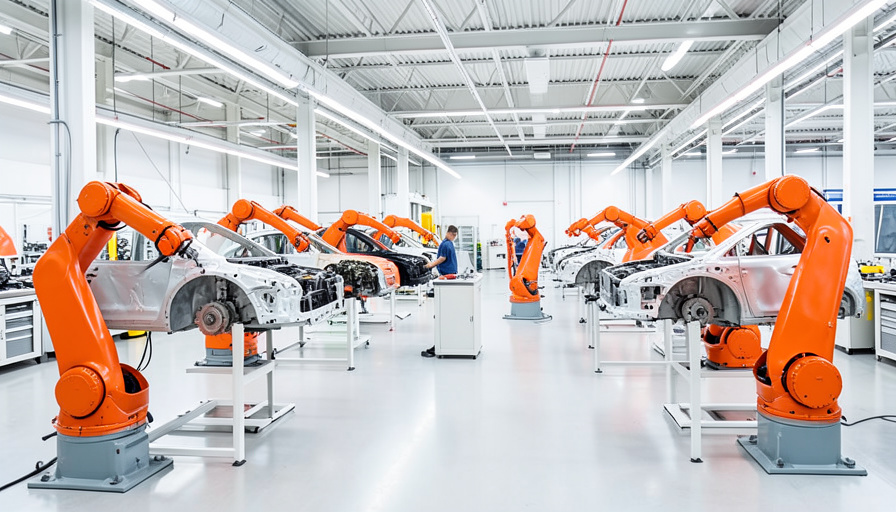
Tesla likes a big manufacturing claim, and the Cybercab comes with one of its biggest. The company says the little two-seat robotaxi rolls off a reinvented assembly line, its “unboxed” process, that shrinks the factory footprint and speeds everything up. Now that production is running at Giga Texas, the claims are getting their first real test in the open.
Quick Answer
Tesla’s unboxed process builds the Cybercab as separate modules, the front, the rear, the two sides, and a structural battery-and-floor unit, all assembled in parallel and joined into a finished car in a single step at the end. Tesla says this halves the size of a traditional production line and lifts factory capacity, with Elon Musk floating a roughly 10-second cycle-time target. Production started at Giga Texas in April 2026, so the concept is real. Whether it hits Tesla’s speed and scale numbers is the part still being tested.
Table of Contents
What “Unboxed” Actually Means
A normal car factory is a long line. A body shell moves through welding, then paint, then general assembly, picking up parts in sequence while workers and robots reach into a mostly built car. It works, but the vehicle spends the whole journey as one awkward object being dragged along.
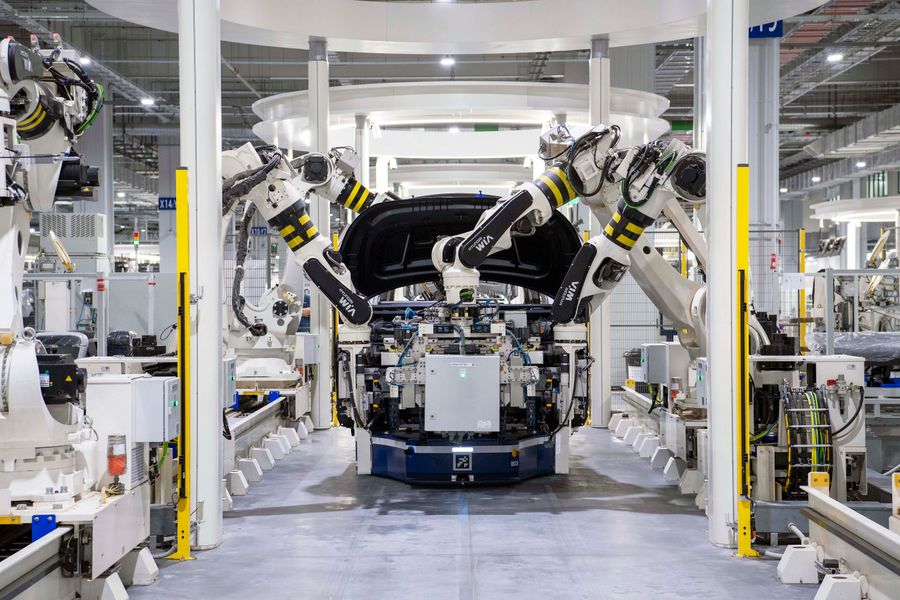
The unboxed idea, which Tesla first floated at its 2023 investor day, breaks that apart. Instead of one line, separate teams build separate chunks of the car at the same time: front, rear, both sides, and the structural floor that doubles as the battery pack. Those modules come together and get framed into a whole car in a single step near the end. Because each module is open and easy to reach until the final join, the fiddly work gets simpler. The concept and specs are laid out well in Built In’s Cybercab overview.
What Tesla Is Claiming
The claims are where the eyebrows go up. Tesla says the parallel approach cuts the size of the production line roughly in half, which frees up floor space and, in theory, lets a factory build far more cars in the same building, a point Tesla reiterated this month. Eric Early, the engineering lead on the Cybercab program, has called the process “revolutionary.” Musk has gone further on speed, describing a target where the overall production cycle reaches around 10 seconds per car.
Those are the numbers that make the industry sit up. A 10-second cycle time would be extraordinary. For context, a fast conventional line measures cycle time in tens of seconds to a minute per station, and the whole build takes hours. So the claim is not a small efficiency gain. It is a rethink.
What’s Proven, and What’s Still a Promise
Here is the honest split. The proven part is real and not trivial: Cybercab production launched at Giga Texas in April 2026, and units have been piling up in outbound lots since, including examples with no steering wheel at all, as Quartz reported when the line started. The unboxed process is not a slide anymore. Cars are coming off it.
The promised part is everything about the ceiling. Halving the line is a design claim that only counts once the factory runs at high volume without bottlenecks. The 10-second cycle time is a target, not a measured result. And Tesla has a long record of ambitious manufacturing timelines that slipped, from the Model 3 “production hell” to earlier automation dreams it later walked back. Skepticism here is earned, not cynical.
Why the Rest of the Industry Cares
If the unboxed process delivers even part of what Tesla claims, it changes the math for cheap electric vehicles, because manufacturing cost is where most affordable EVs die. A dramatically smaller, faster line would pressure every rival still running long traditional assembly halls.
If it stalls, it joins the list of bold Tesla targets that arrived late or shrank on contact with reality. Either way, the Cybercab is now the clearest live experiment in whether the car can be built in a fundamentally different shape, and competitors are watching the outbound lots at Giga Texas as closely as anyone.
Main Takeaways
- Unboxed builds the Cybercab as parallel modules joined in one final framing step, not a long sequential line.
- Tesla claims it roughly halves the production line size and raises factory capacity.
- Musk has floated a 10-second cycle-time target, which would be far beyond conventional lines.
- Production is real, running at Giga Texas since April 2026, with units in outbound lots.
- The speed and scale claims remain targets, and Tesla’s timeline history invites caution.
For more on cars and EV technology, browse the DelightfulBlogs Automotive section, or read related coverage in our Tech section.
Frequently Asked Questions
What is Tesla’s unboxed manufacturing process?
It builds a car as separate modules, such as the front, rear, sides, and structural battery-floor, in parallel, then frames them into a finished vehicle in a single step at the end, rather than dragging one body through a long sequential line.
Is the Tesla Cybercab in production?
Yes. Mass production of the Cybercab began at Giga Texas in April 2026, and finished units, including steering-wheel-free versions, have been spotted in outbound lots since.
How is unboxed different from a normal assembly line?
A normal line moves one car through welding, paint, and assembly in sequence. Unboxed splits the car into modules built at the same time on separate stations, which Tesla says makes each part easier to work on and shrinks the overall line.
What does Tesla claim the unboxed process achieves?
Tesla says it roughly halves the size of the production line and boosts factory capacity, and Elon Musk has described a target cycle time of around 10 seconds per car.
Are the claims proven?
Partly. Production itself is proven, since cars are being built. The dramatic speed and scale figures are still targets, and Tesla’s history of slipping manufacturing timelines is a reason to treat them cautiously.
Final Takeaway
The Cybercab has quietly become Tesla’s most interesting factory story, not because of the car but because of how it is put together. Building a vehicle in open modules and snapping them into one at the end is a genuinely different bet, and it is now off the whiteboard and onto the shop floor. The concept has cleared the hardest bar, which is existing. The next test is whether the line that builds it can hit the numbers Tesla keeps promising, and that answer will show up in production totals, not press releases.