
Where Do 19 Million Specimens Go When the Academy Closes?
The closing museum gets the headlines. Scientists are watching the part visitors never see: 19 million specimens, and the question of what happens to them next.
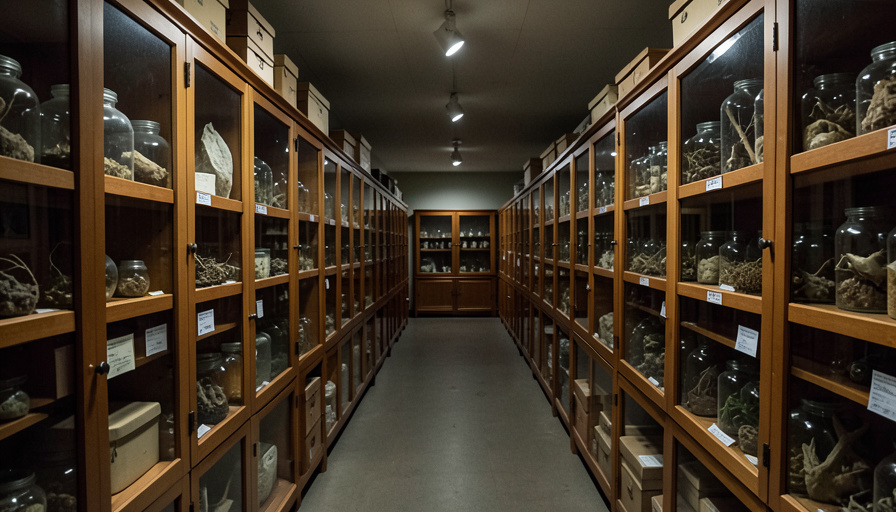
When news broke that the Academy of Natural Sciences would close its Philadelphia museum on September 30, most coverage focused on the galleries, the dinosaurs, and the crowds saying goodbye. Researchers had a different reaction. For them, the museum floor was always the small part. The real Academy is the collection behind the walls: more than 19 million specimens gathered over two centuries, and its future is a far bigger question than any exhibit.
Short Answer
The Academy of Natural Sciences holds over 19 million biological specimens, fossils, and archives, including more than 73,000 type specimens that define what a species officially is. The public museum is closing, but Drexel University says the research operation continues and there are no immediate plans to move the collection. Scientists worry less about the closed galleries and more about long-term stability: whether the specimens keep their climate control, their specialist staff, and their open access to researchers around the world.
What is actually in the collection
The number 19 million is hard to picture, so it helps to name a few of the things inside it. The Academy, founded in 1812, has been collecting since before Darwin published a word, and Thomas Jefferson, John James Audubon, and Charles Darwin himself were all corresponding members. What sits in the cabinets reflects that reach:
- More than 220 plant specimens collected on the Lewis and Clark Expedition of 1804 to 1806.
- Around 300,000 diatom slides, some holding upward of 100,000 microscopic algae each, a few dating to the 19th century.
- 1.4 million algae, lichen, fungus, and slime mold specimens.
- The oldest invertebrate paleontology collection in the United States, plus vertebrate fossils that include a saber-toothed cat skull.
- Vast holdings of birds, fish, and mollusks used by researchers worldwide.
Sitting across all of it are those 73,000-plus type specimens. A type specimen is the single physical example that scientists designated as the reference for a species when it was first described. If you want to confirm what a species actually is, you check the type. That makes the Academy a working reference library for life on earth, which is why the specimens, not the galleries, have drawn the closest attention.
Why 19 million specimens matter
The value is not nostalgia. A natural history specimen is a dated, located, physical record of what was alive at one moment, and you cannot recreate it later. Robert McCracken Peck, a curator at the Academy, put it directly: “These collections were made at specific times in history. We can never go back to collect more of these voucher specimens.” He calls them, “by definition, irreplaceable.”
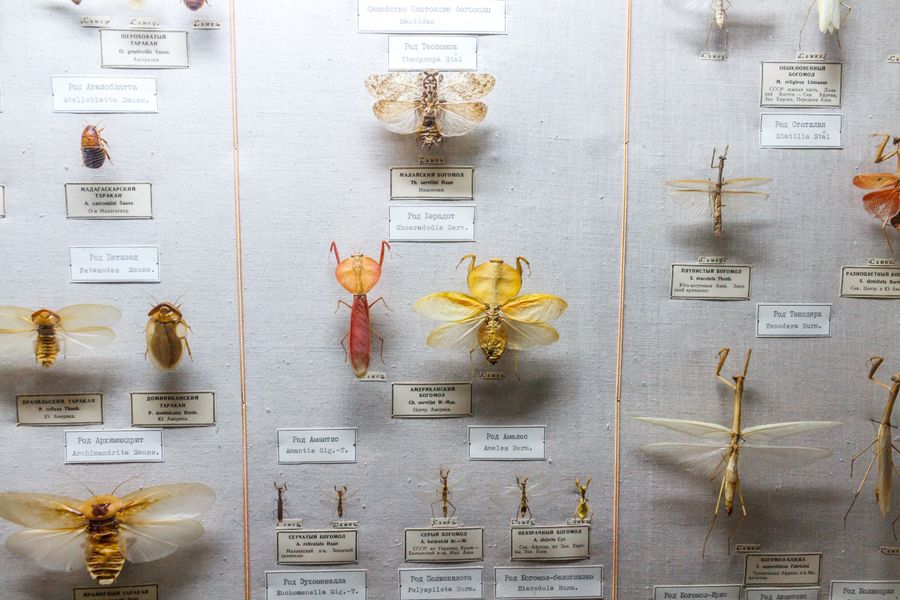
That time-capsule quality is what makes the collection a working scientific tool rather than a trophy case. Diatom collection manager Laura Aycock describes researchers using the old slides to work out “what this river looked like X many years ago,” a baseline you cannot get any other way. Ted Daeschler, a curator of vertebrate zoology, calls the Academy “a stopping point for people studying a wide variety of different things,” from cricket taxonomy to Devonian fish. And modern DNA techniques can now pull genetic material from specimens more than a century old, turning drawers of dried plants and pinned insects into raw material for climate research nobody imagined when they were collected.
The part scientists are actually worried about
Here is the concern that the closing-galleries story tends to miss. A collection this size needs stable temperature and humidity, plus the specialist staff who know how to keep 19 million fragile things from degrading. A building alone is not enough. Trina E. Roberts, president of the Natural Science Collections Alliance, warned that losing that support would be “a recipe for disaster for a collection of this size and importance,” and noted that even a careful move would need about a year of preparation “before they move any specimens.”
The Natural Science Collections Alliance went on record with “profound concern” about the closure destabilizing the institutional support and specialist jobs that a collection depends on. And digitization, often floated as a safety net, only goes so far. A photograph of a dried plant is useful for a catalog search, but you cannot extract DNA from a JPEG. The physical specimen is the thing that has to survive.
What Drexel says happens next
Drexel’s public position is that the science continues even as the museum shuts. Drexel president Antonio Merlo and Academy board chair Suzanne Biemiller said “the stewardship of the Academy’s collections and their use to advance scientific knowledge will be the focus of our work for the near future.” A Drexel spokesperson added that there are “no immediate plans to move the collection,” and that the building will “continue to house its collections, library, archives, and laboratories.”
The honest gap is that no concrete long-term plan has been shared. “No immediate plans to move” is reassurance about the next few months, not a guarantee for the next few decades, and the building is the same one whose operating costs Drexel cited as a reason to close the museum in the first place. That tension, between a collection that needs long-term stability and a building the institution wants to exit, is the real story behind the goodbye crowds.
What Matters Most
- The Academy’s collection holds more than 19 million specimens, including 73,000-plus type specimens that define species for science worldwide.
- Standouts include Lewis and Clark plants, 300,000 diatom slides, and the oldest US invertebrate fossil collection.
- Specimens are irreplaceable time capsules, now used for everything from environmental baselines to century-old DNA research.
- The real risk is not the closed museum but long-term climate control, specialist staff, and research access.
- Drexel says the research continues with no immediate move, but no concrete long-term plan has been released.
For more on this story and related coverage, see the DelightfulBlogs Education section, or follow our News desk.
Frequently Asked Questions
What happens to the Academy of Natural Sciences’ collection when the museum closes?
Drexel says it will keep stewarding the more than 19 million specimens and continue research, with no immediate plans to move them. The public galleries close, but the collection and laboratories are meant to stay in the building for now.
How many specimens does the Academy of Natural Sciences have?
More than 19 million, spanning biology, fossils, and archives, including over 73,000 type specimens, the physical references that define individual species for scientists.
Why are natural history specimens so important?
Each specimen is a dated, located record of what was alive at a moment in time. Researchers use them to track environmental change, confirm species, and even extract DNA from century-old material, which no digital copy can replace.
Will researchers still be able to access the collection?
Drexel says research continues, but scientists have raised concerns about long-term access, climate control, and specialist staffing. Maintaining research access would be a major consideration if the collection is ever moved.
Could the collection be moved or split up?
There are no immediate plans to move it. Experts note that relocating 19 million specimens safely would take about a year of preparation before anything is packed, and would need careful attention to storage conditions and access.
The Bottom Line
Losing a public museum is a real loss for Philadelphia, but the specimens are the part that matters to the rest of the world, and their story is not finished. Nineteen million records of life, some of them the only physical proof a species was ever described, now depend on decisions that have not been fully made yet. The dinosaurs got the farewell crowds. The diatoms and the type specimens are the ones worth keeping an eye on.