
Why Kalimantan Keeps Burning, and What It Costs Its Wildlife
Displaced orangutans and slow lorises are the images that travel around the world. The fire behind them is a bigger and more repetitive story, and its causes are not a mystery.
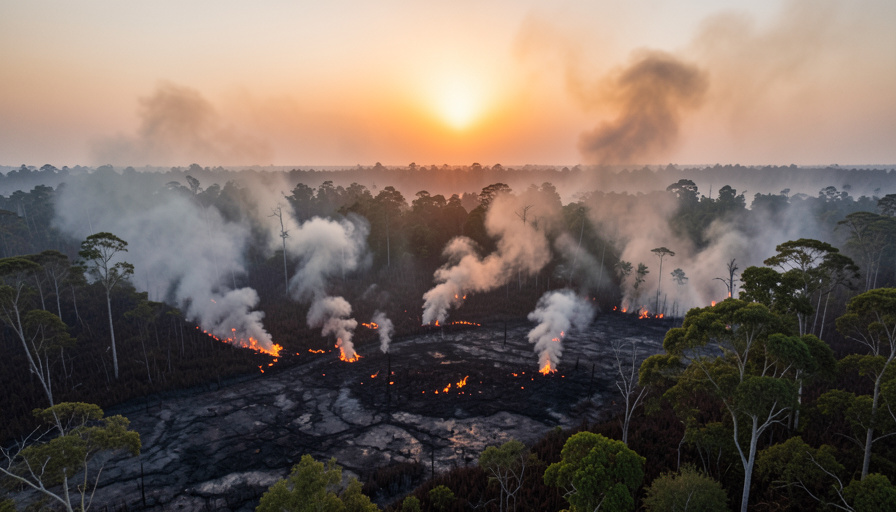
Every dry season, a version of the same photo circulates: a bewildered animal at the edge of a burned forest, or a city skyline vanishing into brown haze. In 2026 the animal is often a Bornean orangutan or a slow loris, and the place is Kalimantan. The rescues are real and worth doing. They also treat the symptom. The fire that keeps pushing these animals out of the forest is a recurring, largely human-made event, and understanding it explains why it happens almost every year.
Quick Answer
Indonesia’s 2026 wildfires had burned more than 1.3 million hectares by the end of August, much of it in Kalimantan on Borneo. The fires are mostly set to clear land, they burn hottest and longest on drained peatland, and a strong El Niño drought made this year worse. The smoke has pushed Kuala Lumpur, Singapore, and Kuching to the top of global pollution rankings, and the flames keep displacing orangutans, proboscis monkeys, and slow lorises toward villages.
How big the 2026 fires got
The scale is easy to understate from a single viral clip. From January through the end of August, the cumulative burned area across Indonesia reached about 1,358,714 hectares, and roughly 1.32 million of that burned in August alone. Peatland made up around 447,600 hectares of the total, which matters more than the raw number suggests, and the 2026 Indonesia wildfires are still being tallied.
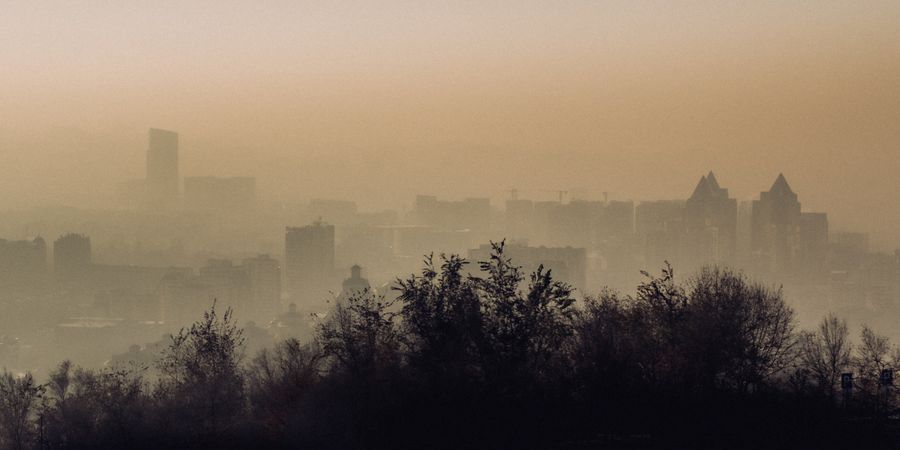
The haze does not stay put. Over the past month, Kuching, Kuala Lumpur, and Singapore have repeatedly landed among the most polluted major cities on earth, and the smoke has drifted as far as the Philippines. That regional spread is why a fire on Borneo becomes a diplomatic and public-health story across Southeast Asia.
Why it keeps happening
Three things stack up to make Kalimantan burn, and they are the same three most years. The first is how the fires start. Most are set deliberately to clear land, and the Indonesian Forum for the Environment, Walhi, reported that 74% of Kalimantan’s hotspots sat inside corporate concession areas, with the largest share on oil-palm cultivation land, followed by mining and forestry permits. This is land clearing at industrial scale, not campfires.
The second is the peat. Borneo’s lowland forests grow on deep peat, a waterlogged layer of partly decomposed plant matter. When companies dig drainage canals to plant oil palm, the peat dries out, and dry peat is essentially fuel. It catches easily, burns underground, and smolders for weeks in a way an ordinary forest fire does not, which is why the smoke is so thick and so hard to put out.
The third is the weather. A developing 2026 to 2027 El Niño produced a brutal dry season, and roughly 90% of the country saw little to no rain in early August, according to Indonesia’s meteorological agency. Dry land, drained peat, and a match are all it takes.
What it costs the wildlife
This is where the viral images come from. Nearly 79% of the wildfire hotspots detected in Kalimantan over the summer sat inside Bornean orangutan habitat, and the same burning forest is home to proboscis monkeys and slow lorises. When the canopy goes, these animals cross roads, climb power lines, and turn up in gardens, which is why rescue teams from the government conservation agency BKSDA and the foundation YIARI have been pulling stranded animals out of the smoke since early September. Every rescue is a small win against a very large loss, since a burned forest does not grow back in a season.
What is being done, and what would actually help
The emergency response is real. Military, police, forestry staff, and volunteers are fighting the fires on the ground and from the air, using water bombing and cloud-seeding to force rain, and Indonesia accepted an offer of firefighting help from Malaysia as the haze crossed the border. That work saves lives and buys time.
The honest part is that annual firefighting is not a fix. As long as peatland keeps being drained for plantations and land keeps being cleared by burning, the fires will return with the next dry year. The durable answers are unglamorous: rewetting and restoring degraded peatland so it stops acting as fuel, and actually enforcing the rules against burning inside the concessions where most hotspots appear. Until those happen, the rescues and the haze warnings will be a yearly ritual.
At a Glance
- Indonesia’s 2026 wildfires burned over 1.3 million hectares by late August, much of it in Kalimantan.
- Most fires are set to clear land, and 74% of Kalimantan hotspots were inside corporate concession areas.
- Drained peatland burns underground for weeks, which is why the smoke is so heavy and persistent.
- A strong El Niño drought left about 90% of the country with little rain in early August.
- Roughly 79% of Kalimantan hotspots were in orangutan habitat, driving the wildlife rescues making headlines.
For more environmental and world coverage, follow the DelightfulBlogs News desk, or read our Travel section on the wider region.
Frequently Asked Questions
Why does Kalimantan catch fire almost every year?
Most fires are set to clear land for agriculture, they burn intensely on drained peatland that acts as fuel, and dry seasons, worsened this year by El Niño, make ignition easy. Those conditions recur most years.
How bad are the 2026 Indonesia wildfires?
More than 1.3 million hectares had burned across Indonesia by the end of August 2026, with about 1.32 million of that in August alone and roughly 447,600 hectares of it peatland.
Why is peatland fire such a big problem?
Peat is a thick, waterlogged layer of plant matter. When it is drained for plantations it dries out and becomes flammable, burning underground for weeks and producing dense, hard-to-clear smoke.
Where does the haze spread?
Smoke from Borneo regularly pushes Kuching, Kuala Lumpur, and Singapore near the top of global pollution rankings, and in 2026 it drifted as far as the Philippines, making it a regional public-health issue.
What happens to the wildlife?
Fires displace orangutans, proboscis monkeys, and slow lorises toward villages, where rescue teams retrieve stranded animals. The larger loss is the burned habitat itself, which takes many years to recover.
Final Takeaway
The rescued loris and the haze-choked skyline are two ends of the same event, and both point back to the same causes: drained peat, cleared land, and a dry year. Indonesia can fight the flames every dry season, and it does, but the fire will keep coming back until the peatland is rewetted and the burning inside plantation concessions actually stops. The animals fleeing toward the roads are not an accident of nature. They are the predictable cost of how the land is being used.