
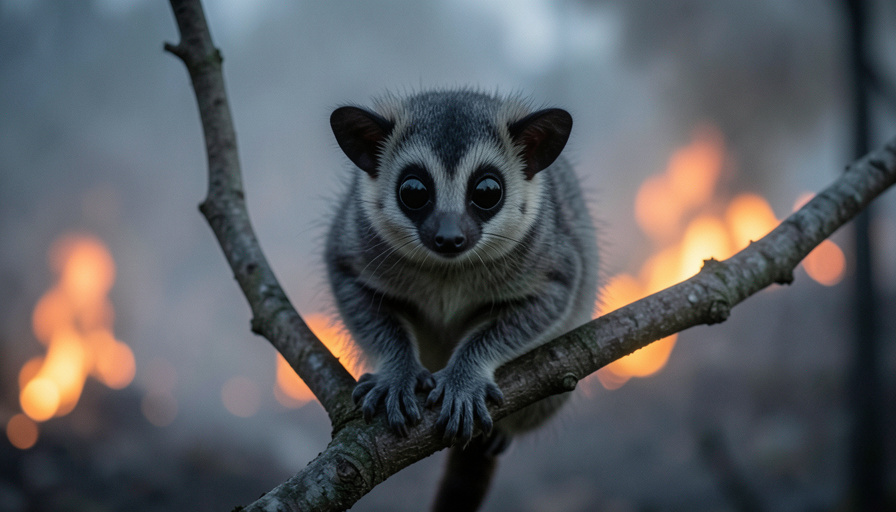
Slow Loris Rescues Rise as Kalimantan Fires Push Wildlife Toward Homes
The fires in Kalimantan are pushing animals out of the forest and into backyards, and the rescue calls are climbing. Here is who responds, and what you should do if a slow loris turns up near you.
When a forest burns, the animals inside it do not simply disappear. They move, and they move toward whatever is left, which is often the edge of a village. Across Kalimantan this fire season, that has meant a steady stream of displaced wildlife showing up near homes and plantations, and a small, wide-eyed primate called the slow loris is one of the species turning up where it should not have to be.
The Short Version
Indonesia’s 2026 fire season has hit Borneo hard, and rescue teams are pulling animals out of smoke-choked forest near populated areas. Nearly 79% of the wildfire hotspots detected in Kalimantan between June and late August sat inside Bornean orangutan habitat, and the same fires displace slow lorises, proboscis monkeys, and other species that then wander toward people. West Kalimantan’s conservation agency and a local rescue foundation have run joint patrols since September 1. If you find a slow loris, do not touch it: it is a protected, venomous animal, and the right move is to call the authorities and keep your distance.
Why the rescue calls are climbing
The driver is simple and grim: there is less forest to hide in. Nearly four out of five fire hotspots detected in Kalimantan over the summer were inside orangutan habitat, which is the same tangled canopy slow lorises depend on. When that canopy burns or fragments, animals that normally never come near people start crossing roads, climbing power lines, and appearing in gardens, and each of those sightings is a potential rescue. Reporting from the region describes teams racing against the fires to reach stranded animals before the flames or the heat do.
The loris is a particular kind of victim here. It is slow, it is nocturnal, and its instinct under threat is to freeze rather than flee. That works against a fast-moving fire, and it also means a displaced loris will often sit motionless on a fence or a wire for hours, which is exactly when a well-meaning resident is tempted to step in.
Who actually does the rescuing
The response is run by people with permits and training, not volunteers with cardboard boxes. In West Kalimantan, the government conservation agency known as BKSDA works alongside the Indonesian rescue foundation YIARI, and the two launched joint patrols and monitoring on September 1, 2026. Their early operations show the pace: a September 4 rescue brought in four orangutans, and the team returned on September 8 for a mother and her nursing infant. Across August, the same group pulled seven orangutans out of fire-hit forest around Ketapang.
Lorises ride along in that same wave of work. International groups have widened their wildfire response for displaced animals in Borneo, and Indonesian outlets have made the case plainly that fighting the fires is itself wildlife protection. The rescue is only the first step, though. An animal that comes in dehydrated, burned, or stressed needs weeks of care, and it cannot go back until there is safe forest to return to, which the fires keep shrinking.
Why a slow loris is not a backyard rescue
This is the part that surprises people. The slow loris is the only venomous primate on earth. It draws a toxin from a gland on its upper arm, mixes it with saliva, and delivers it in a bite that can cause severe swelling and, in rare cases, a dangerous allergic reaction in humans. A frightened loris that has just survived a fire is exactly the kind that bites.
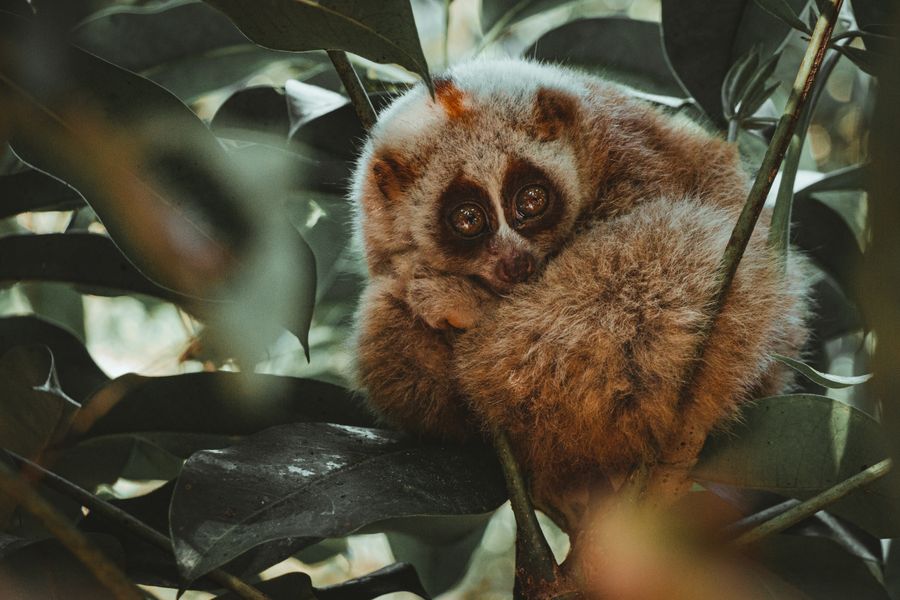
There is a legal problem too. Slow lorises are protected under Indonesian law and listed internationally, so picking one up, keeping it, or moving it is not a favor to the animal. It also feeds the illegal pet trade that already drives a chunk of the demand for these animals. Handling a displaced loris tends to make three problems worse at once: the animal’s stress, your own safety, and the market that traffics them.
What to do if you find one
The useful instinct is to help without touching. Treat a displaced loris, or any confused wild animal near your home, the way a rescue team would want you to.
| Do | Don’t |
|---|---|
| Keep a calm distance and watch from several meters away. | Pick it up, pet it, or try to hold it for a photo. |
| Bring pets and children indoors so the animal is not cornered. | Corner it, poke it, or force it to move. |
| Call the local conservation authority (BKSDA) or a licensed rescue group. | Assume you can drive it to the forest and release it yourself. |
| Note the exact location, time, and whether it looks injured. | Offer human food, milk, or fruit while you wait. |
| Give it shade and space if it is on the ground in daylight. | Post the location publicly before responders arrive, which can draw poachers. |
The reason for the “leave it alone” rule is not squeamishness. A loris that is captured badly, fed the wrong thing, or released in the wrong place usually does worse than one left for trained responders, even if the wait feels uncomfortable.
What To Know
- The 2026 Kalimantan fires are displacing wildlife toward villages, and rescue calls are rising as a result.
- Nearly 79% of Kalimantan’s detected fire hotspots this summer were inside orangutan habitat, the same forest lorises need.
- BKSDA and YIARI have run joint rescue patrols in West Kalimantan since September 1, 2026.
- The slow loris is the only venomous primate, so a bite is a real medical risk, and handling one is also illegal.
- If you find one, keep your distance, secure pets, and call the authorities rather than intervening.
For more on this developing story, follow the DelightfulBlogs News desk, or read our Travel coverage of the wider region.
Frequently Asked Questions
Why are slow lorises showing up near homes in Kalimantan?
Wildfires are burning and fragmenting the forest canopy they live in, so displaced lorises move toward the forest edge, which often means roads, power lines, and gardens near villages.
Are slow lorises really venomous?
Yes. The slow loris is the only venomous primate. It produces a toxin from a gland on its arm, activates it with saliva, and a bite can cause severe swelling and, rarely, a serious allergic reaction.
What should I do if I find a displaced slow loris?
Keep several meters away, bring pets and children inside, and call the local conservation agency (BKSDA) or a licensed rescue group. Do not pick it up, feed it, or try to release it yourself.
Who rescues wildlife during the Kalimantan fires?
West Kalimantan’s BKSDA conservation agency works with the rescue foundation YIARI, and international groups have expanded their wildfire response. They run patrols, retrieve stranded animals, and provide rehabilitation.
Can I keep a slow loris I rescued?
No. Slow lorises are protected under Indonesian and international law. Keeping one is illegal and fuels the illegal pet trade, and rehabilitation should be handled only by licensed carers.
Final Word
The photos that go viral, a loris on a wire or an orangutan at the edge of a burned field, are the visible tip of a much larger displacement happening under the smoke. Rescue teams can pull individual animals to safety, and they are, but every rescue depends on there being somewhere safe to send them back to. Until the fires ease and the forest recovers, the most useful thing most people can do is the least dramatic one: report what you see, keep your hands off, and let the trained crews do the rest.