
France’s Fast-Fashion Fines: What Influencers and Brands Pay
France’s fast-fashion law is not symbolic. It carries a six-figure fine for influencers and a per-garment fee that scales with how disposable a product is.
A law is only as serious as its penalties, and France’s fast-fashion crackdown put real numbers on the page. Promote the wrong brand as an influencer and you could face a fine in the tens of thousands of euros. Sell the clothes as a producer and you pay a fee that grows with how quickly the garment is built to be discarded. Here is how the money side actually works.
In Brief
France’s fast-fashion law backs its advertising ban with steep penalties. Influencers who promote ultra-fast-fashion products or brands can face fines of up to €100,000, whether they were paid or not. Producers pay a rising per-garment eco-contribution to a national scheme, scaled to a product’s environmental impact and how likely it is to become waste, and capped at half the item’s pre-tax price. Exact fee figures are still being finalized by implementing decrees, but the direction is clear: the cheaper and more disposable the item, the more it costs to sell it in France.
Table of Contents
The Influencer Penalty
This is the part that made headlines in creator circles. Under the law, people engaged in commercial influence, paid or not, are prohibited from promoting products classified as ultra-fast fashion or the brands behind them, and violations can carry fines reported at up to €100,000. Coverage has gone so far as to frame it as making the promotion of fast fashion effectively illegal in France, as the Fashion Law Journal put it.
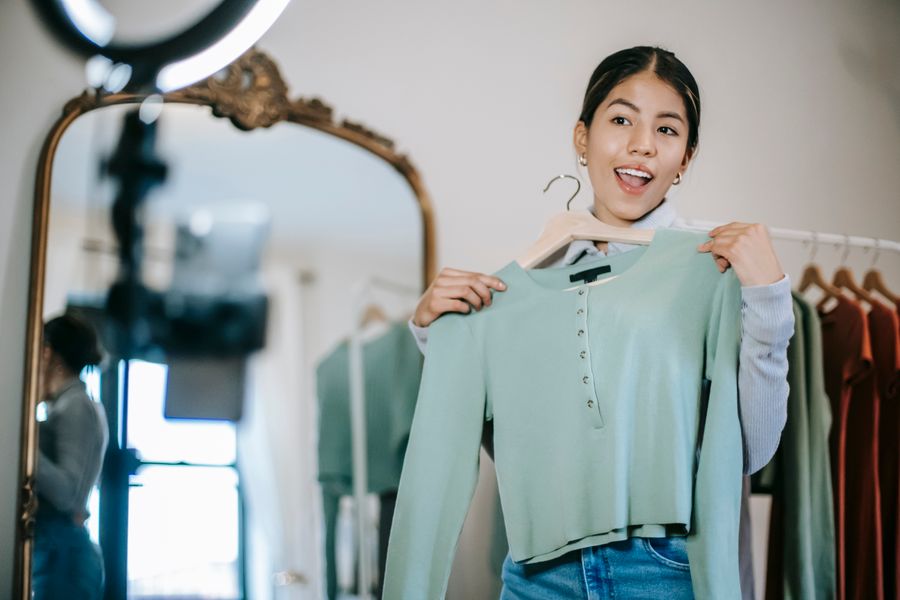
The scope matters. It is not limited to paid partnerships. An unpaid haul or an affiliate link for a qualifying brand can fall inside the rule, which is a sharp change for creators who built audiences on exactly that content.
The Producer Eco-Fee
On the business side, the mechanism is a bonus-malus, a penalty layered onto the existing producer-responsibility system. Companies placing ultra-fast-fashion products on the French market pay adjusted eco-contributions to the national textile scheme, and the malus rises over time toward a ceiling set for 2030, according to industry guidance on the law.
Reported figures vary as the decrees are finalized, ranging in coverage from a small charge on items like underwear to a larger one on coats, and scaling upward through the decade. One guardrail is firm across sources: the fee is capped at 50% of a product’s pre-tax selling price, so it cannot exceed half of what the item costs before tax.
How the Fee Is Calculated
The amount is not a flat tax. It is tuned to how environmentally costly and disposable a product is. The calculation weighs a garment’s environmental impact, including its carbon footprint and harm to biodiversity, along with how long it is likely to last and how quickly it is likely to become waste. It is then adjusted by factors like the sheer breadth of a company’s product range, how often it drops new offers, and whether it builds in incentives for repair. In plain terms, the fast-and-cheap model that defines ultra-fast fashion is exactly what pushes the fee up.
Who Actually Pays, and What’s Still Being Set
The eco-fee lands on producers and importers, not directly on shoppers, though some of it may filter into prices over time. The advertising penalty lands on creators and the brands that market to them. What is not fully locked in are the precise euro amounts, which implementing decrees are still setting, and parts of the advertising ban face open questions about how they square with wider European rules. The framework is law; the fine print is still arriving.
Key Takeaways
- Influencers can face fines reported at up to €100,000 for promoting ultra-fast-fashion products or brands, paid or not.
- Producers pay a rising per-garment eco-fee to the national textile scheme under a bonus-malus system.
- The fee scales by product type and climbs toward a ceiling set for 2030.
- It is calculated from environmental impact, lifespan, and waste likelihood, and capped at 50% of the pre-tax price.
- Exact figures are still being finalized by decree, and parts face European-law questions.
This article is general information, not legal advice. Penalty amounts and rules are being finalized and vary by product and situation, so consult a qualified professional about how any requirement applies to a specific business or creator.
For more consumer and regulation coverage, browse the DelightfulBlogs Law section, or read related retail stories in our Business section.
Frequently Asked Questions
How much can an influencer be fined under France’s fast-fashion law?
Reporting puts the maximum at up to €100,000 for promoting ultra-fast-fashion products or brands. The prohibition applies whether or not the influencer was paid for the promotion.
Who pays the fast-fashion eco-fee?
Producers and importers that place ultra-fast-fashion products on the French market pay the eco-contribution to the national textile scheme. Shoppers are not billed directly, though costs can filter into prices.
How much is the per-item fee?
It varies by garment and rises over time toward a 2030 ceiling, with exact figures being set by implementing decrees. Across sources, the fee is capped at 50% of a product’s pre-tax selling price.
How is the fee calculated?
It is based on a product’s environmental impact, expected lifespan, and likelihood of becoming waste, then adjusted for factors like the breadth of a company’s range, how often it releases new offers, and repair incentives.
Are the exact penalties final?
Not entirely. The framework is law, but implementing decrees are still finalizing precise fee amounts, and parts of the advertising ban face open questions about compatibility with broader European rules.
What This Means
France did the thing most fast-fashion criticism never does: it attached a price. A €100,000 exposure for a haul video and a fee that rises with a garment’s disposability turn a moral argument into a line on a budget. The exact numbers will shift as the decrees land, but the design is deliberate, since it makes the cheapest, most throwaway clothing the most expensive to sell and promote. Whether other countries copy the approach may depend less on the politics and more on whether these penalties actually change what gets made.